

 русский
Content
- 1 Winch Cable, Wire Rope, and Synthetic Rope: Clarifying the Terminology
- 2 Steel Winch Cable: Construction, Strengths, and Limitations
- 3 Synthetic Winch Rope: UHMWPE Performance and Trade-Offs
- 4 Synthetic vs. Steel Winch Cable: Direct Comparison
- 5 Winch Cable Size Chart: Matching Diameter to Rated Capacity
- 6 Trailer Boat Winch Strap vs. Wire Rope: The Right Choice for Trailering
- 7 Small Steel Cable: Light-Duty Wire Rope for Non-Winch Applications
Winch Cable, Wire Rope, and Synthetic Rope: Clarifying the Terminology
The terms "winch cable," "winch wire rope," and "steel cable" all refer to the same product in most practical contexts: a multi-strand assembly of drawn steel wires twisted together into a flexible, high-strength pulling line. "Wire rope" is the technically correct industry term — "cable" is informal but universally understood. Both are distinct from "synthetic winch rope," which uses high-modulus polymer fibers (most commonly UHMWPE — ultra-high-molecular-weight polyethylene, sold under brand names such as Dyneema and Spectra) in place of steel.
Understanding the difference between these two products — and when each is the appropriate choice — is one of the most consequential decisions for anyone setting up a recovery winch, boat trailer winch, utility winch, or off-road vehicle system. The right choice depends on working load, environment, safety priorities, and how the winch will be used.
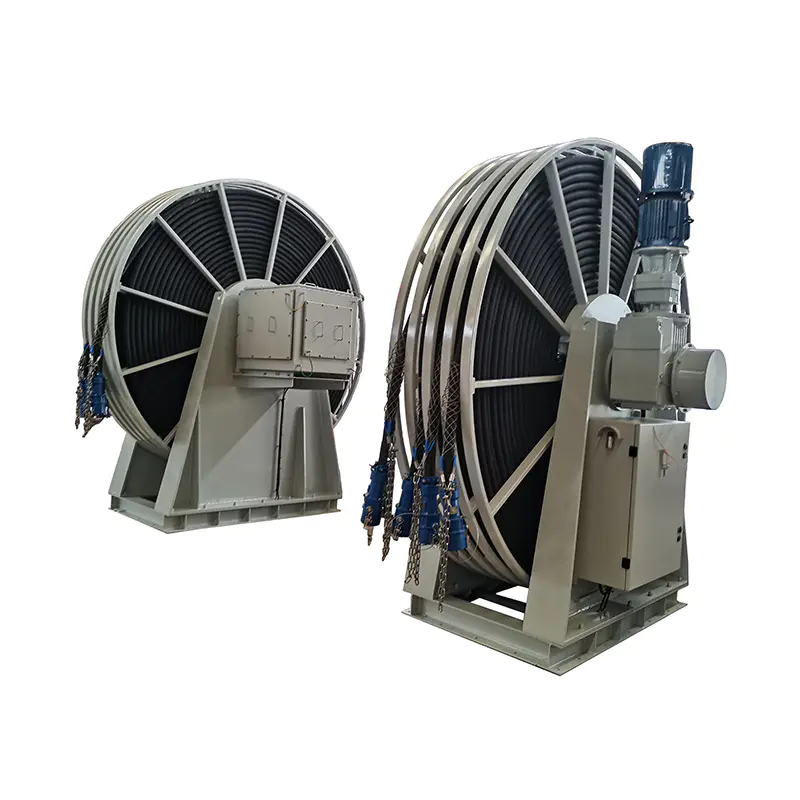
Steel Winch Cable: Construction, Strengths, and Limitations
Standard steel winch cable is constructed from multiple strands of drawn high-carbon steel wire twisted around a core — typically a fiber core (FC) or independent wire rope core (IWRC). The most common construction for winch applications is 6×19 classification (6 strands, each containing 19 wires), which balances flexibility with abrasion resistance. Heavier-duty applications may use 6×37 construction for greater flexibility on small-diameter drums.
Steel wire rope stores significant elastic energy under tension. When a loaded cable snaps, it releases that stored energy explosively — the recoil can reach speeds exceeding 300 mph at the break point, and documented fatalities from wire rope snapback are recorded in both industrial and off-road recovery contexts. This is the single most critical safety distinction between steel and synthetic winch lines.
Where Steel Cable Has Genuine Advantages
- Abrasion resistance: Steel wire rope withstands dragging over sharp rocks, concrete edges, and rough terrain without significant degradation. Synthetic rope is highly vulnerable to abrasion and can be cut through by a single sharp edge under load.
- Heat resistance: Steel is unaffected by the radiant heat generated during prolonged winching or by contact with hot surfaces. UHMWPE synthetic rope begins to lose strength at temperatures above 150°F (66°C) and can melt at sustained high temperatures.
- UV and chemical resistance: Steel does not degrade from UV exposure. Synthetic rope, while generally UV-stabilized, loses strength over time with prolonged sun exposure if untreated sheaths are used.
- Cost: Steel wire rope is significantly cheaper per foot than equivalent-rated synthetic rope — typically 30–60% less at matching breaking strength specifications.
- Industrial and marine applications: Cranes, anchor winches, logging equipment, and commercial marine applications predominantly use steel wire rope because synthetic rope's heat and abrasion vulnerabilities are unacceptable in these environments.
Synthetic Winch Rope: UHMWPE Performance and Trade-Offs
Synthetic winch rope made from UHMWPE fiber has a tensile strength-to-weight ratio approximately 8–10 times greater than steel wire rope of equal diameter. A 3/8-inch synthetic rope rated at 20,000 lbs breaking strength weighs roughly 2.5 lbs per 100 feet — the steel equivalent weighs approximately 24 lbs per 100 feet. This weight difference matters substantially when the rope is stored on a drum and when it must be handled manually in a recovery situation.
The safety advantage is the defining argument for synthetic rope in vehicle recovery: UHMWPE stores almost no elastic energy under tension. When a synthetic line parts, it drops to the ground rather than recoiling violently. Most serious off-road recovery operators and competition teams have transitioned to synthetic rope specifically for this reason — the risk profile of a parted line is fundamentally different.
Synthetic rope also floats in water, making it practical for boat and ATV recovery in aquatic environments where steel cable sinks and corrodes. It does not develop the metal burrs and broken wires ("fishhooks") that make handling damaged steel cable a significant laceration risk.
Limitations of Synthetic Rope to Account For
- Abrasion vulnerability: The most significant practical limitation. Synthetic rope must be kept off sharp rock edges and abrasive surfaces under load. A protective rope sleeve (typically a nylon or polyester sheath) should be used wherever contact with rough surfaces is expected.
- Drum layering: When synthetic rope is wound in multiple layers on a winch drum, the inner layers under high load can be crushed by the outer layers, degrading fibers over time. Proper spooling tension and avoiding burying the line under high load mitigates this.
- Inspection requirement: Damage to synthetic rope (abrasion, UV degradation, chemical exposure) is not always visually obvious. Regular inspection under good lighting and periodic load testing is required for safety-critical applications.
- Price: Quality UHMWPE winch rope runs $80–$200 for a 50-foot, 3/8-inch line — two to three times the cost of equivalent-strength steel wire rope.
Synthetic vs. Steel Winch Cable: Direct Comparison
| Factor | Steel Wire Rope | Synthetic UHMWPE Rope |
|---|---|---|
| Snapback danger | High — stores elastic energy | Low — drops on failure |
| Weight (3/8" × 50 ft) | ~12 lbs | ~1.25 lbs |
| Abrasion resistance | Excellent | Poor without sleeve |
| Heat resistance | Excellent | Limited above 150°F |
| Floats in water | No | Yes |
| Handling safety | Fishhook wire hazard | Safe to handle bare-handed |
| Corrosion resistance | Galvanized only; rusts over time | Excellent |
| Cost (50 ft, 3/8") | $30–$70 | $80–$200 |
| Best environment | Industrial, logging, marine cranes | Off-road recovery, ATV/UTV, overlanding |
Winch Cable Size Chart: Matching Diameter to Rated Capacity
Winch cable and rope sizing follows a straightforward principle: the rated breaking strength of the line must exceed the winch's maximum rated line pull, and the diameter must be compatible with the drum groove size. Working load limit (WLL) is typically set at 1/5 of the minimum breaking strength (MBS) for wire rope in critical applications — a 5:1 safety factor. For vehicle recovery winching, where loads are dynamic and unpredictable, a minimum 3:1 safety margin between expected load and cable MBS is considered acceptable practice by most recovery guidelines.
| Diameter | Steel Wire Rope MBS (6×19, IWRC) | Synthetic UHMWPE MBS | Typical Winch Application |
|---|---|---|---|
| 3/16" (5 mm) | ~4,200 lbs | ~5,000–6,000 lbs | ATV / small UTV winches (1,500–3,000 lb rated) |
| 1/4" (6 mm) | ~7,000 lbs | ~9,000–11,000 lbs | Light truck / mid-size SUV (3,500–6,000 lb rated) |
| 5/16" (8 mm) | ~11,500 lbs | ~16,000–18,000 lbs | Full-size truck / Jeep (6,000–9,500 lb rated) |
| 3/8" (10 mm) | ~16,800 lbs | ~22,000–26,000 lbs | Heavy truck / expedition vehicle (9,500–12,000 lb rated) |
| 7/16" (11 mm) | ~23,000 lbs | ~30,000–36,000 lbs | Heavy-duty truck / commercial recovery (12,000+ lb rated) |
A critical note on winch drum layering: rated line pull applies only to the last layer on a full drum. As rope winds onto a drum, each additional layer increases the effective drum diameter, reducing the mechanical advantage of the winch. A winch rated at 9,500 lbs on the first layer may pull only 7,200–7,500 lbs on the third layer. For maximum pulling force, keep the drum as empty as possible — spool out most of the line before hooking up to a load.
Trailer Boat Winch Strap vs. Wire Rope: The Right Choice for Trailering
A trailer boat winch strap — a flat polyester webbing strap — is the standard choice for loading and securing a boat on a trailer winch, and for good reason. Unlike wire rope or round synthetic rope, a flat strap distributes load over a wider contact area on the bow eye, reducing point stress on the hull fitting. It is also significantly easier to handle in wet conditions and does not develop the sharp wire burrs associated with aging steel cable.
Standard boat trailer winch straps are 2 inches wide and rated at 3,500–5,000 lbs working load limit for typical recreational boat applications. The strap should be replaced when any of the following are present: fraying or cuts to the webbing, visible UV bleaching across more than 20% of the strap surface, flattening of the strap thickness by more than 20%, or any visible damage to the hook or attachment hardware.
Some trailer winches include both a strap (for retrieval and securing) and a separate safety chain or wire rope as a backup. For boat trailering, the strap handles the mechanical loading during retrieval; the safety chain prevents catastrophic loss if the strap or hook fails during road transit. Both components serve different functions and should not be used interchangeably.
Small Steel Cable: Light-Duty Wire Rope for Non-Winch Applications
Small steel cable in the 1/16" to 3/16" diameter range is used across a wide variety of applications outside of winching: aircraft cable for control systems and turnbuckle rigging, hanging hardware for signs and displays, safety tether lines, bicycle locks, and balustrade infill cables. The most common constructions for small-diameter flexible applications are 7×7 (49 wires total — flexible and kink-resistant) and 7×19 (133 wires — very flexible, used for control cables and applications requiring frequent movement).
| Diameter | 7×7 MBS | 7×19 MBS | Common Use |
|---|---|---|---|
| 1/16" | 500 lbs | 480 lbs | Picture hanging, light rigging, zip ties |
| 3/32" | 1,000 lbs | 1,000 lbs | Cable railings, sign suspension, aircraft control |
| 1/8" | 1,700 lbs | 2,000 lbs | Balustrade infill, safety lanyards, light guy wire |
| 3/16" | 3,700 lbs | 4,200 lbs | ATV winch cable, antenna guy wire, deck rigging |
For corrosive environments — marine, coastal, outdoor architectural — Type 316 stainless steel cable is the preferred material over galvanized carbon steel. Stainless cable is approximately 15–20% weaker at the same diameter but resists rust and pitting in salt air and contact with water indefinitely, eliminating the maintenance cycle required to keep galvanized cable serviceable.