

 русский
An underground cable puller rarely gets attention until something goes wrong. When a heavy power cable has to travel through a buried duct, a cable tunnel, or a trench that was closed up months ago, the difference between a clean pull and an expensive repair usually comes down to the machine waiting at the duct mouth and the experience of the crew running it.
We have been manufacturing cable pulling winches and cable management equipment in Jiangyin, on the south bank of the Yangtze River, since 1956, and every project still teaches us something new about how cable behaves once it is underground. This guide covers what these machines actually do, how to size one for a real duct run, and the habits that keep both the cable and your people intact.
Content
What an Underground Cable Puller Actually Does
Strictly speaking, an underground cable puller describes a family of machines rather than one product. What they share is a job: applying steady, controlled tension so a cable travels through a duct, conduit or trench without being crushed, kinked or dragged over an abrasive edge.
In day-to-day use you will meet four main configurations:
- Drum winches, where a pulling rope or the cable itself is wound onto a powered drum. These are the workhorses of long duct runs.
- Capstan and continuous pullers, which rotate a grooved drum so rope passes through without interruption, suiting runs longer than any drum could hold.
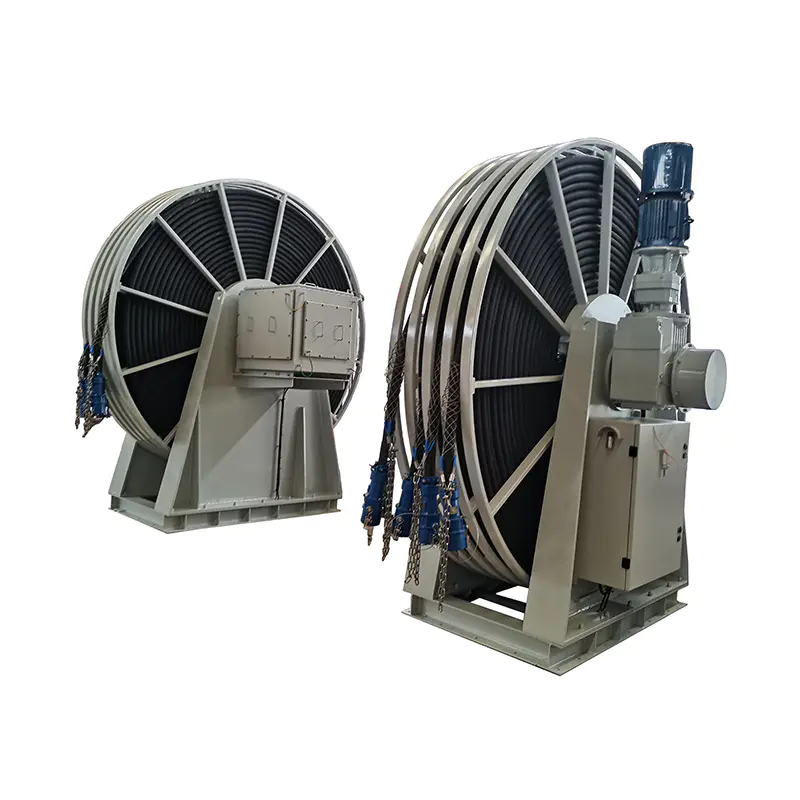
- Reel-based systems, which keep the cable on a powered reel and pay it out under tension, protecting it between pulls.
- Trailing cable winches, which travel with mobile equipment and manage the cable that follows a machine at the working face.
Underground, the machine usually has to sit at a manhole or duct mouth, develop enough line pull to beat friction across several hundred meters of conduit, and respond the instant tension spikes. That blend of compactness, power and control is what separates a purpose-built puller from a hoist borrowed from the yard.
Drive Systems and Where Each One Fits
Not every pull calls for the same power source. The right drive depends on where the machine will stand, how much tension the cable can safely accept, and who will be operating it at the end of the shift.
| Drive system | Typical pulling range | Where it shines | Points to watch |
|---|---|---|---|
| Electric motor-driven winch | Light to very heavy, scaled by drum and gearbox | Duct runs, tunnels and shore power cable routing with mains supply nearby | Power quality, soft start and tension limiting for delicate cable |
| Hydraulic winch | Heavy to extremely heavy | Mining, construction and mobile plant that already carries hydraulics | Oil cleanliness, hose wear and heat build-up on long pulls |
| Manual or hand winch | Light loads only | Short pulls, tight indoor spaces and emergency work | Operator fatigue and limited control over distance |
| Motor-driven reel | Matched to cable weight and line speed | Pay-out and recovery where the cable stays on the reel | Slip ring care, level winding and brake adjustment |
In most duct work the electric winch wins, simply because mains power is usually available, the pull is long and steady, and the operator wants fine control rather than raw force. Where a site has no reliable supply, or the machine must travel with a shovel or drill rig, hydraulics take over.
Sizing the Pull Before You Start
Oversizing a puller is not automatically safe, and undersizing it is never safe. Pull tension has to stay below the cable manufacturer's maximum allowable figure, usually given as a multiple of cable weight or as a fixed value in kilonewtons.
Before choosing a machine, work through these factors:
- Cable weight per meter, including armour, bedding and outer sheath.
- Duct friction, which changes with material, age, dirt and moisture inside the conduit.
- Bend angles and offsets, because every bend adds sidewall pressure and multiplies the load.
- Elevation change between the entry pit and the far end, especially on risers and shafts.
- Lubrication, since a suitable pulling lubricant can cut required tension significantly.
- A safety margin, so the winch still has capacity if a duct turns out tighter than expected.
A rough calculation on paper takes ten minutes and can save a cable worth many times the cost of the puller. If the numbers crowd the cable limit, reduce the load with lubrication, intermediate assist points or a segmented pull rather than pushing the machine harder.
Where Underground Cable Pullers Earn Their Keep
The same basic machine turns up in very different surroundings. Understanding the application is the fastest way to narrow down drum capacity, drive type and control options.
Utility ducts, trenches and substation feeds
Distribution cable is often installed into pre-laid ducts, which means a long, low-friction but unforgiving pull. A steady electric winch with tension monitoring handles this well, and keeping cable on a powered reel between sections shields it from grit and water at the bottom of the trench.
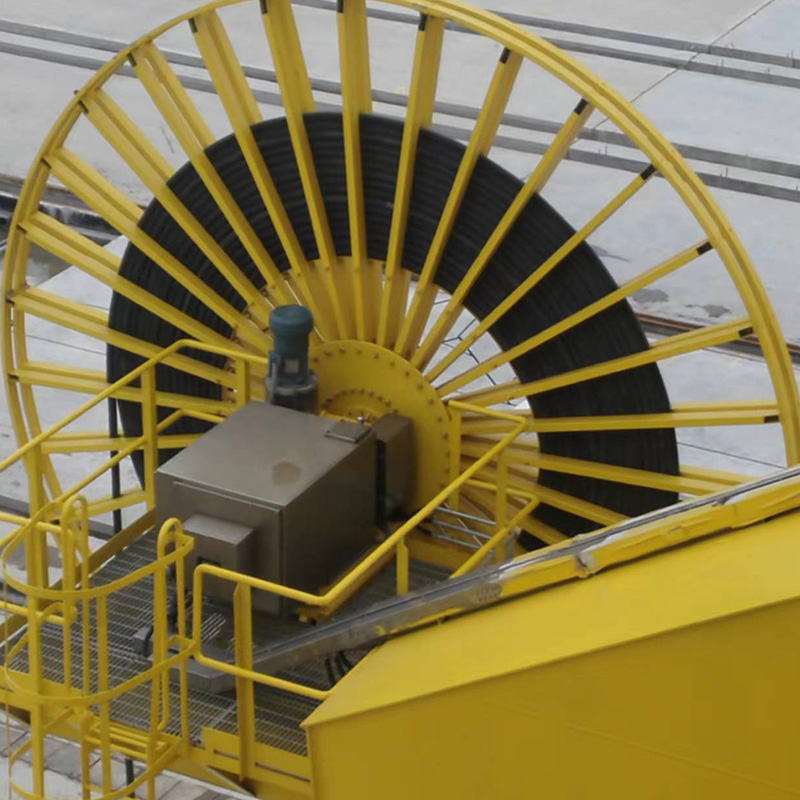 Motor-driven cable reelMotor-driven cable reel mainly consists of a rotatable cable winding drum and a driving motor. Driven by the motor, the winding drum can rotate in a specific direction...View Product →
Tunnels, shafts and confined spaces
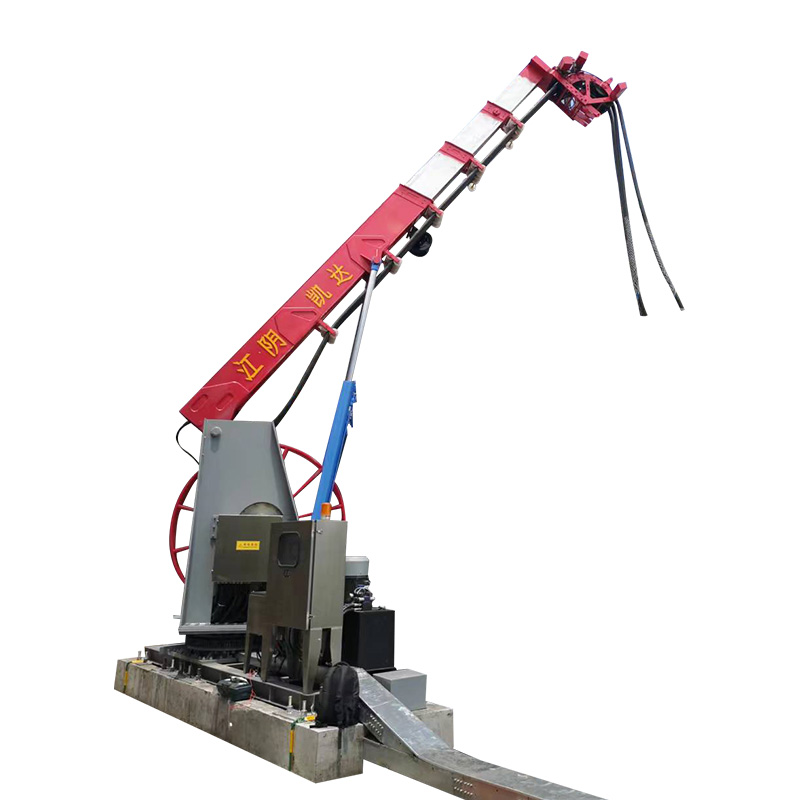
In cable tunnels and transit projects, the puller may have to work from a narrow ledge or a platform where a standard skid will not fit. Machines with a reach arm can stand clear of the walkway while still guiding the cable along the correct alignment.
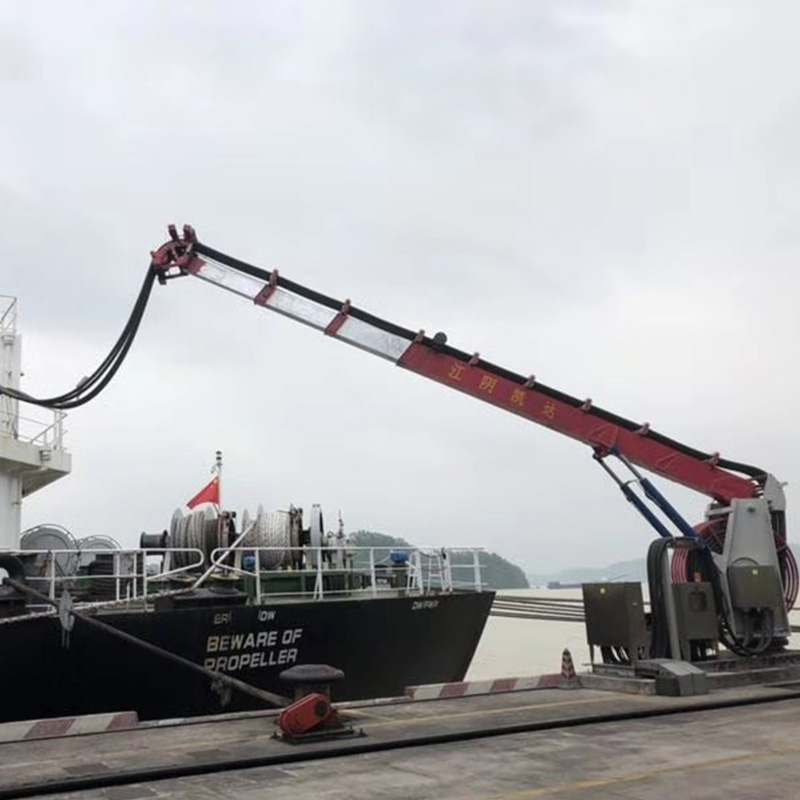 Fixed telescopic arm cable pulling winchFixed telescopic arm cable pulling winch is mainly composed of fixed arm, telescopic arm, hydraulic station, hydraulic drive mechanism and winch system. Its telescopic...View Product →
Mining, quarries and mobile equipment
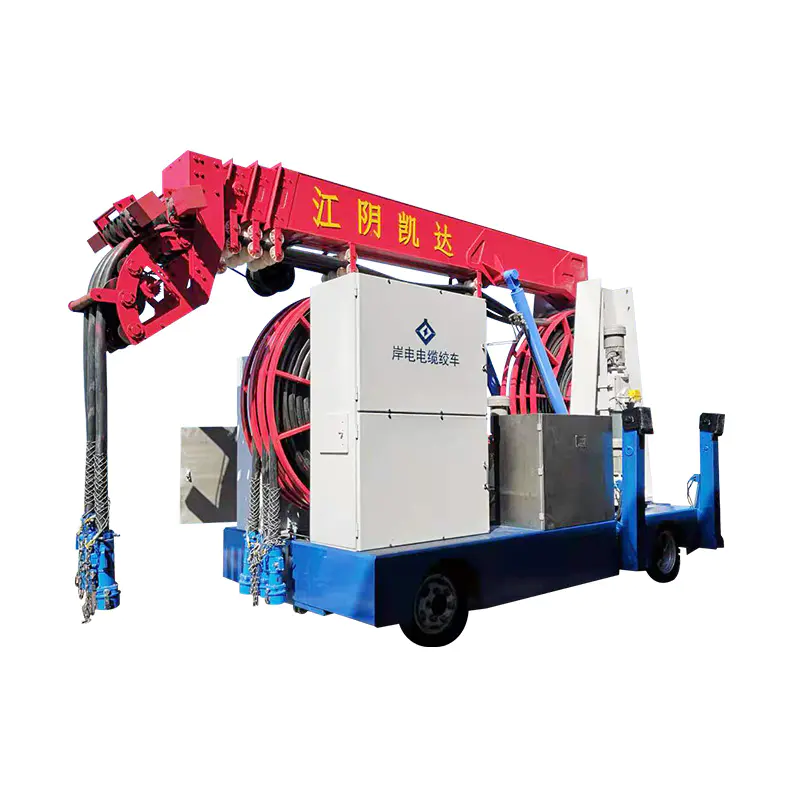
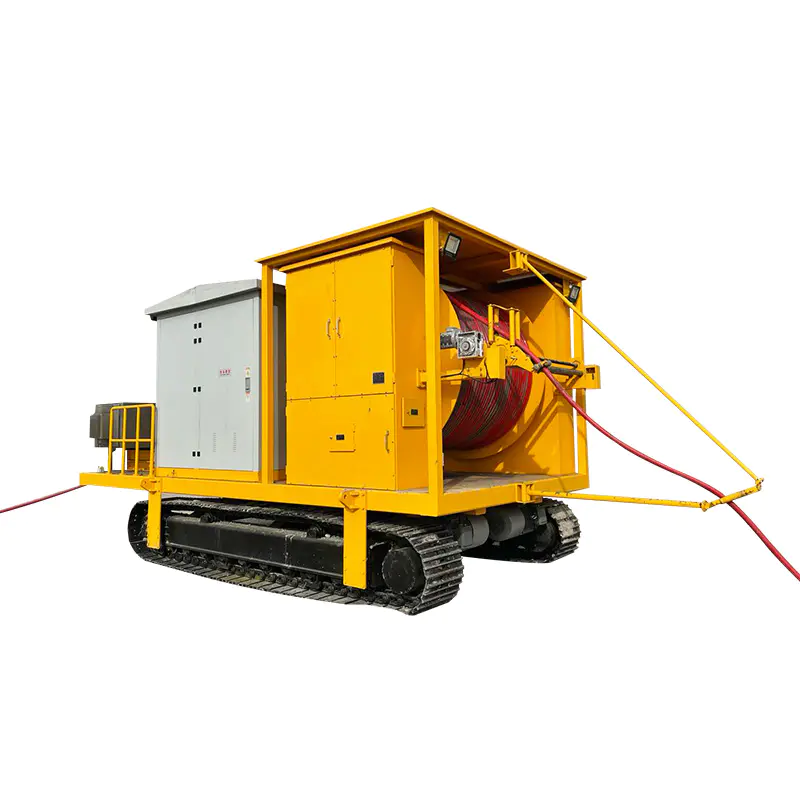
Trailing cables on electric shovels, drills and loaders take far more abuse than static cable. They are dragged, stepped on and bent around every corner of the bench, so a dedicated tail cable winch that keeps tension even and reels cable away from the tracks pays for itself in cable life alone.
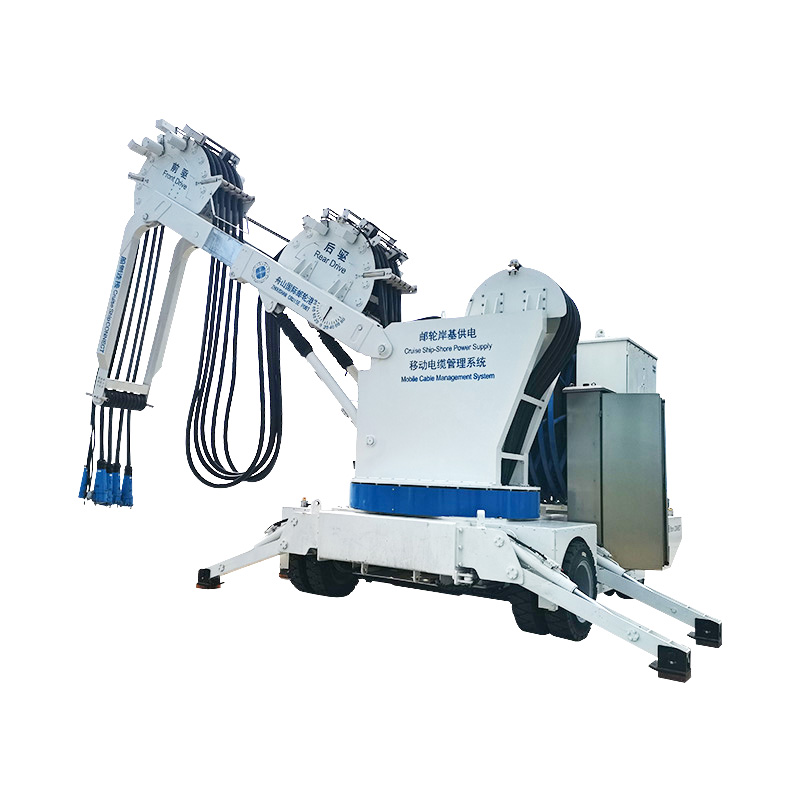
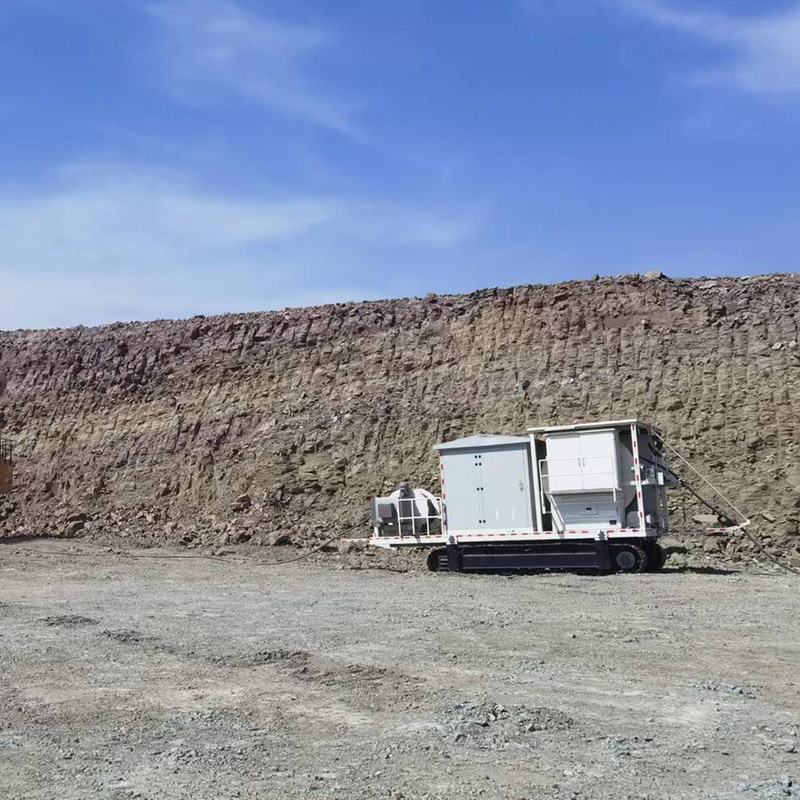 Electric shovel tail cable pulling winchView More Cruise ship shore power cable pulling winchView Product →
Safety Habits That Come With Experience
Most cable pulling incidents are not dramatic equipment failures. They are small oversights that compound: a rope that should have been retired, a bend nobody padded, a crew member standing in the wrong place. These habits cost almost nothing and prevent most of what we see.
- Calculate the expected tension before the pull and write it down, so the operator has a number to compare against.
- Inspect rope, swivel, grips and shackles before every job, and retire anything with flat spots or broken strands.
- Keep everyone clear of the bight and the line of the rope, because a snapped rope stores enough energy to injure.
- Use a load cell or tension limiter so the machine stops before the cable reaches its limit.
- Pad every bend and use rollers at pit entries, since sidewall pressure damages insulation faster than linear tension.
- Agree on signals or radio protocol in advance, and nominate one person to give the stop command.
Water in the duct, sharp duct shoulders and contaminated lubricant are the small details that decide whether a cable survives. Treat them as part of the plan, not as bad luck.
What to Look For in a Manufacturer
A puller is only as good as the engineering behind it. Ask about drum capacity, gearbox rating, brake type, control voltage, ingress protection and how tension limits are set. A supplier who answers those questions in detail can usually adapt the machine to your site instead of asking you to adapt your site to the machine.
Our workshop covers 25,000 square meters, with 12,500 square meters of manufacturing space, producing around 1,000 shore power cable winches, 10,000 sets of low-voltage electrical products, 300 sets of lifting magnets and 500 sets of winding devices each year. We work to ISO9001 and to the relevant national standards, and we have spent more than twenty years designing cable reels and shore power cable winches of both continuous and intermittent types. Because applications differ, our drive options range from scroll spring and weight-operated designs through hydraulic friction and hysteresis clutch systems to variable torque and variable frequency control.
That variety matters underground. A machine suited to a port apron may be wrong for a mine bench, and a reel suited to a crane may be wrong for a duct pull.
Getting the Right Puller for Your Next Project
Send us the cable type, route length, number of bends and available power, and we will help you work out the pulling capacity, drum size and control arrangement that fits. If you are still comparing options, this guide on how to choose the right cable winch for your project walks through the questions our engineers ask first, while this article on pulling heavy-duty cable covers the practical side of setting up the pull itself.
Underground cable work rewards preparation. Get the tension calculation, the machine and the crew briefing right, and the pull becomes just another routine day on site.