

 русский
Ask anyone who has spent a long shift beside a cable winch or a motor-driven reel where the trouble usually begins, and the answer is rarely the motor. It is almost always the point where the cable meets the machine — the small, unglamorous cable roller wheel that decides whether a heavy conductor feeds smoothly into its groove or fights every metre of its travel. We have been building cable handling equipment in Jiangyin since 1956, and a roller wheel is still the first part we inspect when a unit comes back to the workshop.
Content
- 1 What Is a Cable Roller Wheel?
- 2 Where Roller Wheels Do Their Work
- 3 Materials and Groove Profiles
- 4 Five Numbers That Decide Whether the Wheel Fits
- 5 Roller Wheels in Shore Power and Port Operations
- 6 Mining and Heavy Industry: A Harsher Set of Rules
- 7 How Roller Wheels Fail, and What It Tells You
- 8 How We Approach Roller and Reel Design
- 9 A Short Checklist Before You Order
What Is a Cable Roller Wheel?
"Cable roller wheel" is one of those workshop terms that quietly covers several related parts. In its simplest form it is a wheel with a groove, mounted on a shaft or bracket, whose only job is to keep a cable aligned and carry its weight without letting it rub against a steel edge. Depending on who is asking, the same idea may be called a guide roller, a fairlead sheave, a pulley wheel, a level-wind roller or a corner roller.
It helps to separate two things that are often mixed together. A cable roller is usually an assembly: a frame, a spindle and one or more wheels laid along a trench or duct route. A roller wheel is the rotating element inside that assembly, or the single wheel fitted to a winch, a reel or a cable trolley. When a maintenance engineer goes looking for a replacement, it is almost always the second one — one wheel with a defined outer diameter, groove profile, bore and bearing.
Where Roller Wheels Do Their Work
In cable handling equipment, roller wheels and sheaves turn up in four broad settings, and each one asks something slightly different of them.
- Reel and winch guidance. At the drum exit, a grooved wheel sets the fleet angle so the cable spools evenly instead of bunching at one end.
- Shore power and port handling. On a quay, guiding wheels carry heavy shore power cable between ship and socket box, with salt spray, wind load and tidal movement in play.
- Mining and mobile equipment. Electric shovels drag their trailing cable over rough ground, and tail-end rollers take a beating from grit and rock.
- Trench, duct and tunnel laying. A string of small rollers keeps the cable off the ground at every direction change and manhole entry.
The common thread is friction. Every roller wheel exists to replace sliding contact with rolling contact, and once that substitution stops working the cable jacket pays the price. It is the same principle behind preventing cable damage on the drum during winding.
Materials and Groove Profiles
Two decisions shape how a roller wheel behaves in service: what it is made of, and how the cable sits in it. Steel and cast iron give a long life under high load but need a smooth groove finish, otherwise the wheel becomes the abrasive. Nylon and UHMWPE are kinder to cable jackets and resist corrosion, which is why they dominate trench work. Polyurethane on a steel core is a good middle path for continuous running at moderate load.
| Wheel type | Typical material | Groove or face | Works best for |
|---|---|---|---|
| Single-groove sheave | Cast steel or ductile iron | V or U groove, one cable | Winch drum exits and fleet-angle control |
| Polymer roller | Nylon or UHMWPE | Shallow U groove | Trench and duct routes with light loads |
| Crowned flat roller | Polyurethane on steel core | Flat, slightly crowned | Long runs where the cable may drift sideways |
| Flanged drum roller | Cast iron or fabricated steel | Flat with side flanges | Reel entry points with high side-load risk |
| Corner roller frame | Mixed polymer or steel wheels | Two or three wheels per frame | Bends, manholes and direction changes |
A groove that is too narrow pinches the jacket; one that is too wide lets the cable wander and wear the groove shoulders. The right fit is a cradle, not a clamp.
Five Numbers That Decide Whether the Wheel Fits
When a customer sends a photograph of a worn roller and asks for "the same one", these are the figures we need before we can quote sensibly.
- Cable outer diameter. The groove radius should follow the cable, not the other way round.
- Minimum bend radius. The wheel diameter must be large enough that the cable is never bent tighter than its datasheet allows.
- Fleet angle. The angle between cable and drum axis is usually kept within one to two degrees; a badly placed guide wheel can double it.
- Load per wheel. Static cable weight, dynamic forces during acceleration, and any side load from wind or current.
- Duty and environment. Salt, coal dust, grit and temperature swings decide bearing seals and surface treatment.
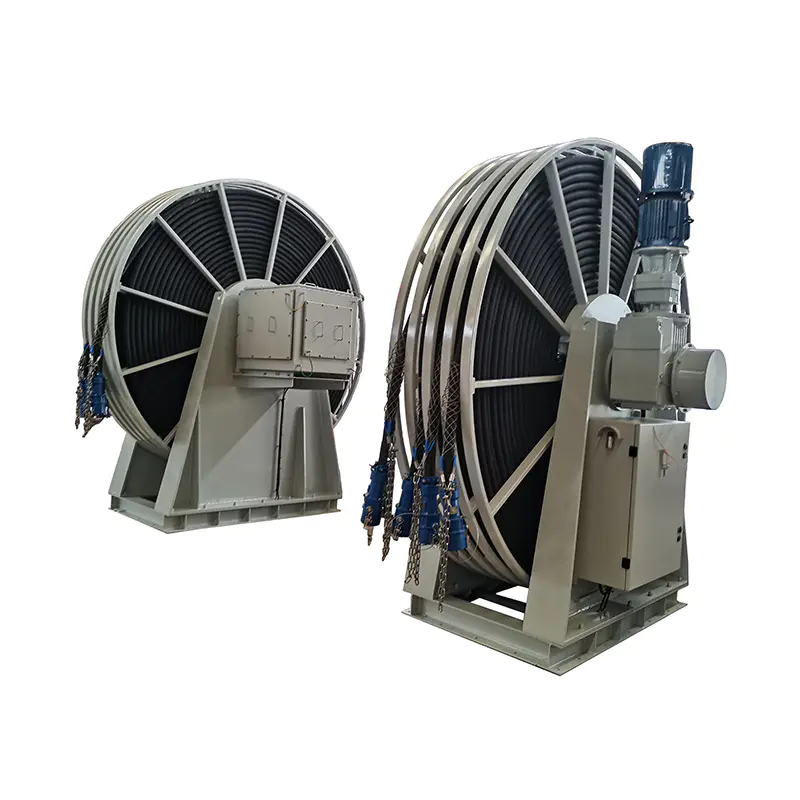
These five answers also shape the reel or winch the wheel is bolted to, which is why we treat the two as one design problem rather than two separate purchases — the same reasoning set out in our notes on choosing a motor-driven cable reel for heavy-duty work.
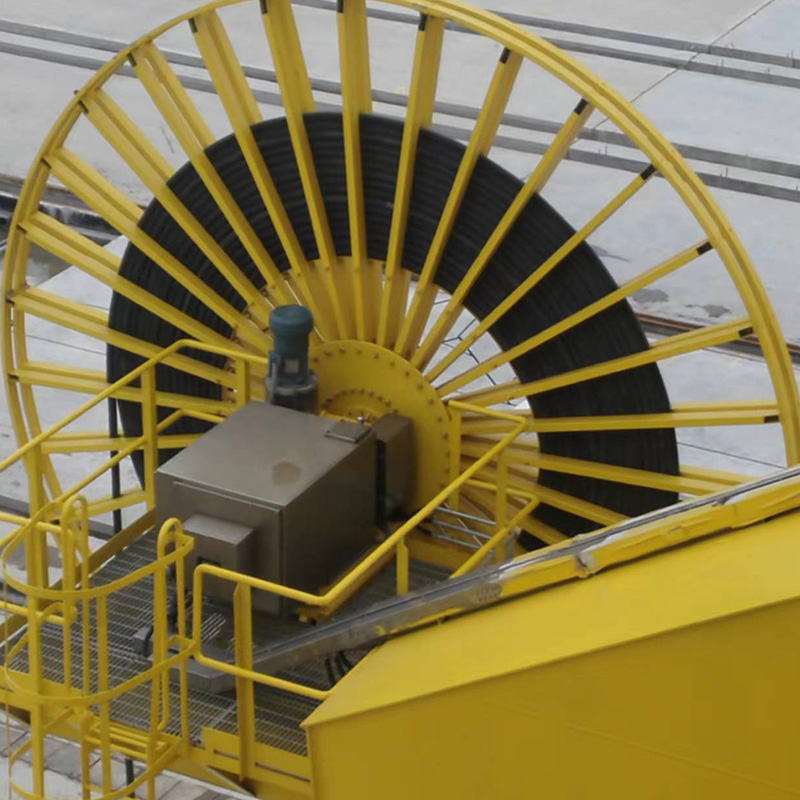 Motor-Driven Cable Reel for Heavy-Duty Winding and UnwindingA motor-driven drum with adjustable speed, direction and optional tension control, suited to heavy-duty cable handling where reliable winding and release are essential.View Product →
Roller Wheels in Shore Power and Port Operations
A cruise terminal is an unforgiving place for cable guidance. Shore power cable is thick, heavy and stiff, and it has to travel from a quay-side connection point to the ship's inlet while the vessel rises and falls with the tide. Roller wheels here must carry high load at low speed, resist salt corrosion and keep the cable clear of the quay edge.
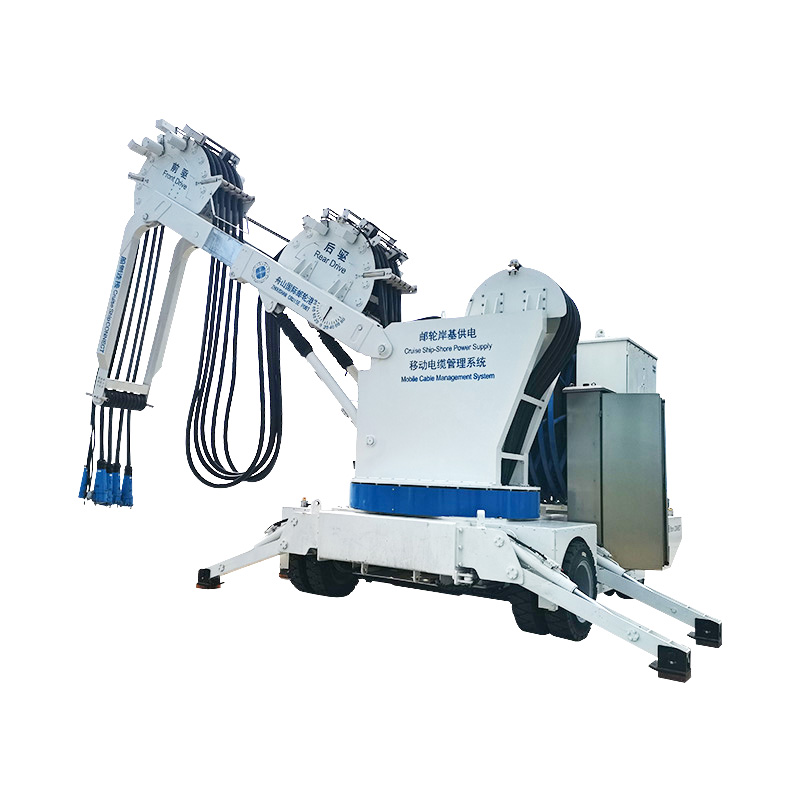
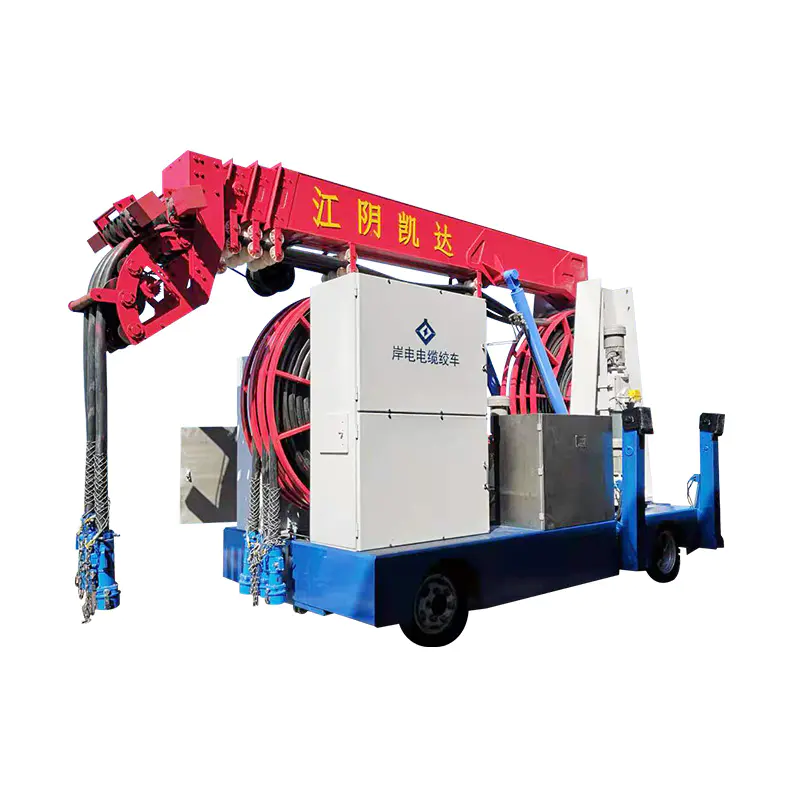
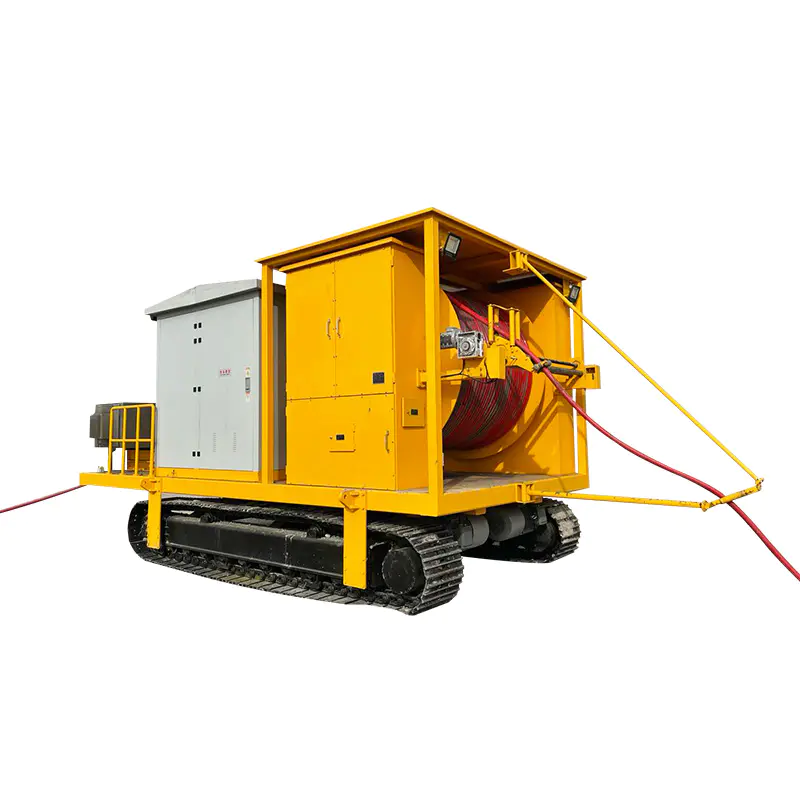
This is the environment our self-propelled shore power cable pulling winches were designed for: the machine travels to the connection point and manages traction and recovery, while guiding wheels hold the cable on a controlled path. When the geometry of a berth is unusual, the roller layout is usually the first thing that changes.
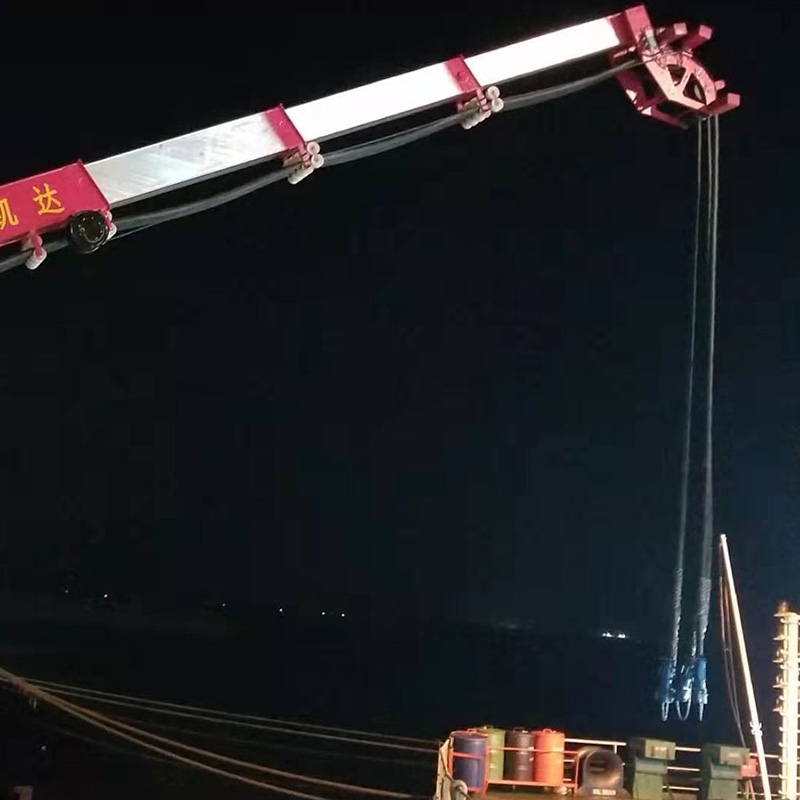 Self-Propelled Shore Power Cable Pulling WinchA self-propelled winch for pulling, laying and recovering shore power cable, with controlled traction and a clamping mechanism for ports and ship berthing areas.View Product →
Mining and Heavy Industry: A Harsher Set of Rules
On an open-pit bench, the trailing cable of an electric shovel is dragged, steered and occasionally run over. Tail-end roller wheels are consumable items on these machines, and their design is dominated by abrasion resistance and by keeping the cable away from hot surfaces and sharp rock. Hardened steel wheels with sealed bearings tend to outlast lighter polymer versions here, even though they cost more and are less forgiving on tight bends.
Our electric shovel tail cable pulling winches follow the same logic: guide geometry first, pulling force second, because a machine that steers badly will destroy cable no matter how much it can pull.
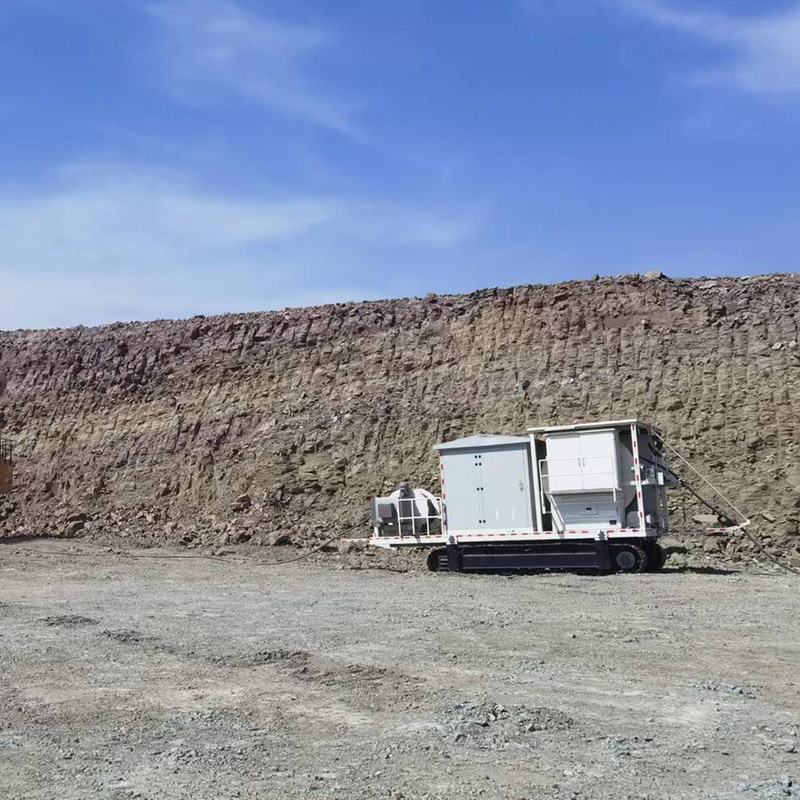 Electric Shovel Tail Cable Pulling Winch for Open-Pit MinesA crawler-mounted retraction truck that follows an electric shovel, combines main and auxiliary cable drums with transformer assembly, supporting power transmission in open-pit coal mines.View Product →
How Roller Wheels Fail, and What It Tells You
A worn roller wheel is a useful diagnostic, because the wear pattern usually points straight at the underlying problem.
- Flat spots on one side of the groove. The cable is running against the shoulder, normally an alignment or fleet-angle issue.
- A dry, screaming bearing. Lost lubrication or a failed seal, often from water ingress rather than age.
- Oval groove or a polished groove floor. The wheel is undersized for the load, or the cable is sliding rather than rolling.
- Scuffed jacket with no visible wheel damage. Look for a seized wheel or a bracket that has shifted a few millimetres.
Maintenance is unglamorous work: check that every wheel turns freely, keep groove floors clean, grease to the bearing maker's interval, and replace a wheel once the groove has worn enough to pinch. On quay-side equipment, an inspection after every storm season is worth more than any scheduled overhaul.
How We Approach Roller and Reel Design
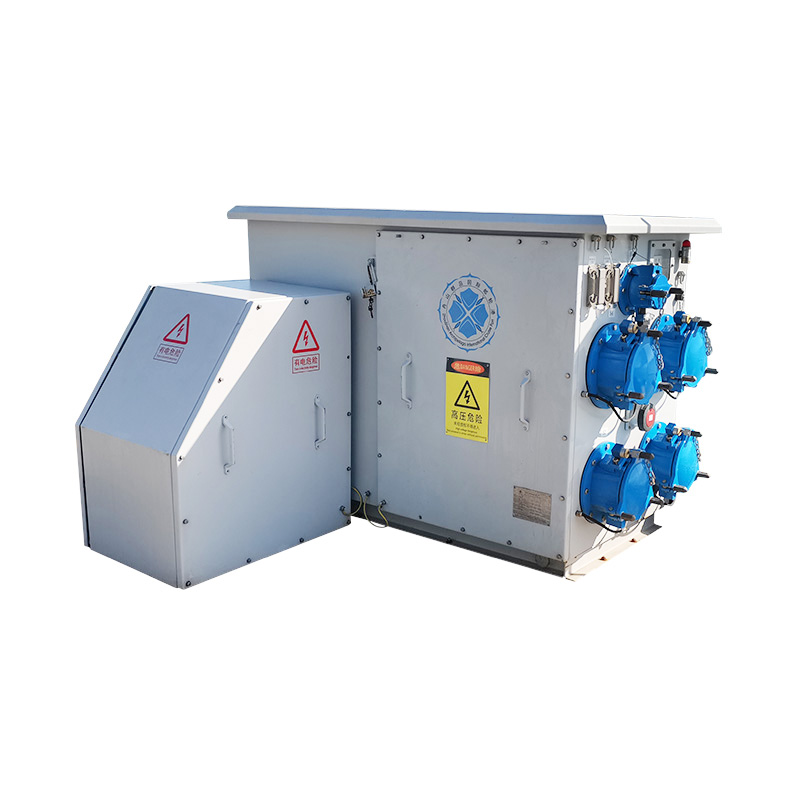
Jiangyin Kaida Mechanical and Electrical Manufacturing works from a 25,000 square metre plant on the Yangtze, with 12,500 square metres under roof and an ISO 9001 quality system behind what we ship. We have spent more than twenty years on cable reels, winches and shore power socket boxes, and roller geometry on those machines is part of the design brief rather than an accessory chosen at the end.
Our reels and winches use a range of drive systems — scroll spring, counterweight, hydraulic friction, hysteresis clutch, variable torque and variable frequency control — and each one imposes different demands on the guide wheels. Rated capacity runs to 1,000 shore power cable winches a year and 10,000 low-voltage units and sets, alongside smaller runs of lifting magnets and winding devices. Most projects come down to a conversation about cable diameter, route geometry and duty cycle, and the drawings follow from there.
A Short Checklist Before You Order
- Measure the real cable outer diameter, not the nominal size.
- Confirm the minimum bend radius and compare it with the wheel diameter.
- Count the wheels in the route and note every direction change.
- Record the environment: salt, dust, moisture, temperature, wash-down.
- Decide whether the wheel is a fast wear item or a permanent structural part.
- Keep one spare set on site; a seized guide wheel can cost a whole shift.
A cable roller wheel is a modest part with an outsized influence on the life of a cable and the reliability of the machine around it. Get the groove, the diameter, the bearing and the alignment right, and the rest of a cable handling system tends to behave. Get them wrong, and no amount of motor power will compensate. If you are working through a route or a reel design and want a second opinion, our engineering team is glad to look at a sketch, a photograph or a worn sample and tell you what we would change.