

 русский
Content
Introduction
In the world of infrastructure development, power transmission, and telecommunications, the efficiency of laying cables is directly tied to the performance of the equipment used. Among these, the cable pulling winch machine stands as the backbone of successful installation. Whether for underground conduits or overhead lines, choosing the right machinery can be the difference between a project completed ahead of schedule and one plagued by costly delays and mechanical failures. This guide explores the critical technical aspects, comparative advantages of power systems, and best practices to ensure your cable pulling operations are both productive and safe.
Understanding the Role of Cable Pulling Winches
At its core, a cable pulling winch is designed to exert a controlled force to guide cables through ducts, tunnels, or across spans. These machines are engineered to manage tension, speed, and distance, ensuring that sensitive electrical or fiber optic cables are not damaged during the installation process. An effective winch does more than just pull; it monitors the integrity of the cable and provides the stability required to handle high-friction environments.
Hydraulic vs. Electric: The Core Power Comparison
One of the most frequent decisions project managers face is selecting between hydraulic and electric winch systems. Each has distinct technical characteristics that make it suitable for specific operational environments.
| Feature | Hydraulic Winch | Electric Winch |
|---|---|---|
| Power Density | Very High | Moderate |
| Continuous Duty Cycle | Excellent (no overheating) | Limited (prone to thermal buildup) |
| Control Precision | Proportional and smooth | Step-based or frequency drive |
| Maintenance Needs | Requires fluid/hose inspection | Requires motor/electrical checks |
| Environmental Impact | Risk of hydraulic leaks | Clean operation |
| Ideal Application | Heavy-duty, long-distance pulls | Light to medium, indoor or urban |
Hydraulic Winch Systems
Hydraulic winches are the industry standard for large-scale, heavy-duty applications. Their primary advantage lies in their ability to provide consistent, high-torque power over extended periods without the risk of overheating. In complex projects involving long distances or high-friction ducts, a hydraulic system maintains stable tension, which is crucial for preventing cable deformation. Furthermore, the ability to fine-tune speed and pulling force through hydraulic valves gives operators a level of control that is indispensable for high-stakes installations.
Electric Winch Systems
Electric winches are celebrated for their simplicity, ease of installation, and cleaner operation. They are ideal for projects where a hydraulic power unit is impractical or where environmental regulations limit the use of hydraulic fluids. Modern electric winches, particularly those equipped with advanced variable frequency drives, have closed the gap in control precision. However, they remain best suited for intermittent duty cycles. In extended, high-resistance pulls, electric motors must be carefully monitored to avoid the thermal degradation of windings.
Critical Factors for Equipment Selection
Selecting the appropriate winch machine requires a deep understanding of your project requirements. The following technical criteria should be your primary focus:
- Maximum Line Pull Capacity: Always calculate the total resistance of your cable run, including weight, friction coefficients, and elevation changes. As a rule of safety, your winch should be rated at least 25 to 30 percent higher than your calculated maximum load to account for unexpected friction or startup inertia.
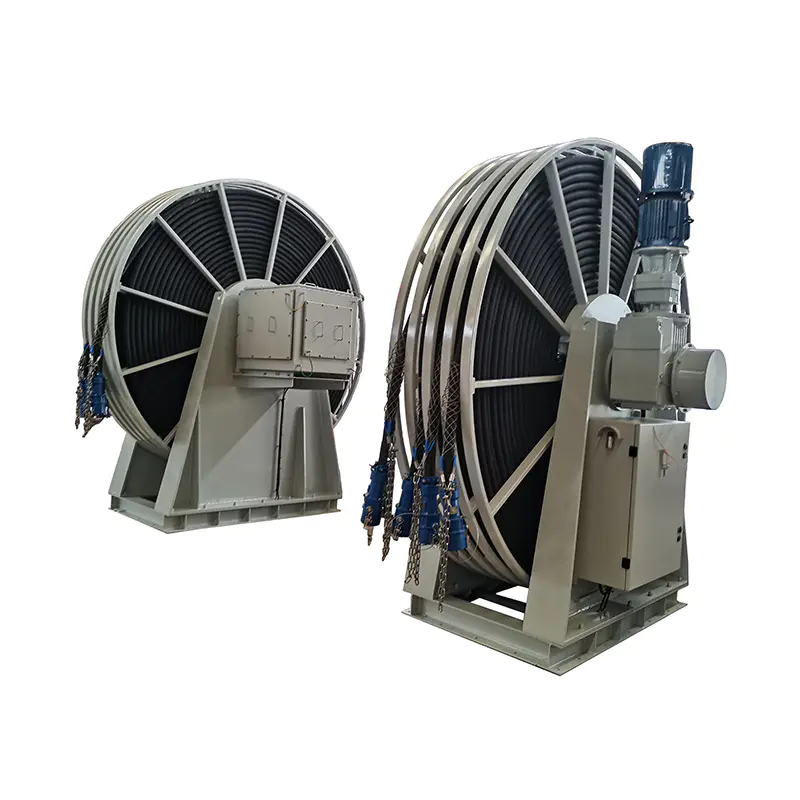
- Drum Capacity and Spooling: The drum must be capable of accommodating the required length of cable or rope without excessive layering. Excessive layering can reduce effective pulling force and cause uneven cable wrapping, which can lead to binding or damage.
- Tension Monitoring Systems: For modern fiber optic or high-voltage cables, real-time tension monitoring is not optional. A winch equipped with a calibrated load cell and an automatic shut-off mechanism protects the cable from exceeding its maximum permissible tension.
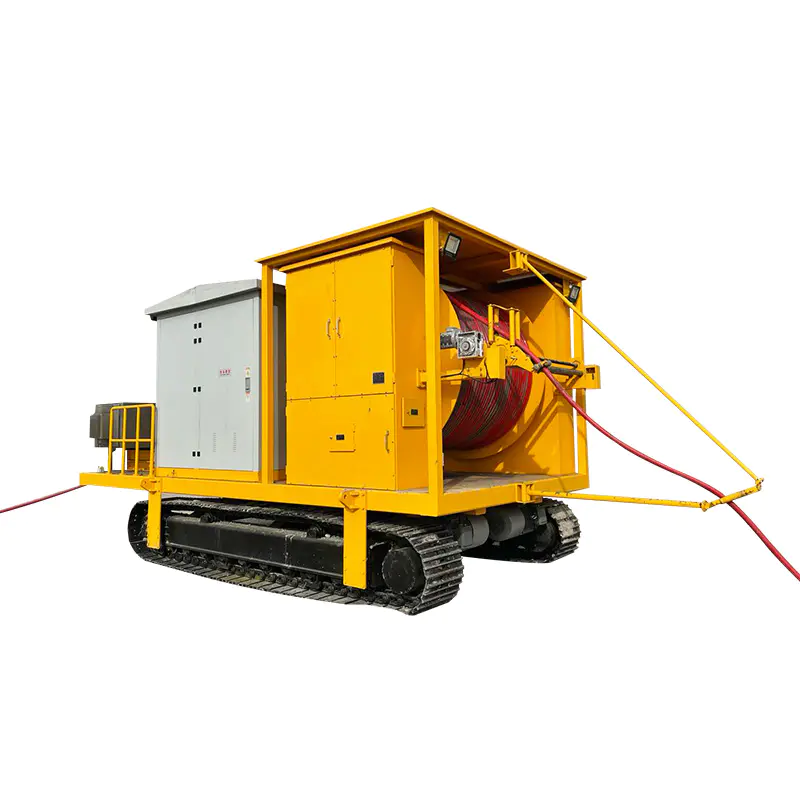
- Mobility and Deployment: Consider the terrain. For remote sites, a trailer-mounted winch with a diesel engine offers complete autonomy, whereas stationary or skid-mounted units are better suited for permanent facilities or controlled construction environments.
Best Practices for Cable Pulling Operations
Even the most advanced equipment requires adherence to professional operational protocols to achieve optimal results.
Pre-Operation Inspection
Before every shift, a comprehensive inspection should be performed. This includes checking the hydraulic fluid levels or electrical connections, inspecting the rope or cable for fraying or kinking, and verifying the functionality of the emergency stop systems. Testing the winch without a load is a standard procedure to ensure that the braking system and controls are responding correctly.
The Importance of Lubrication and Friction Management
Friction is the primary enemy of efficient cable pulling. Regardless of the winch’s power, the coefficient of friction within a conduit or trench can skyrocket if proper cable lubricants are not used. Always utilize industry-approved lubricants that are compatible with the cable jacket material to significantly reduce the required pulling force, thereby extending the life of the winch and the cable itself.
Managing the Load Path
Alignment is critical. The winch must be anchored firmly to a stable, structural point to prevent shifting during high-tension phases. The cable should enter the drum at an angle as close to perpendicular as possible. Avoid pulling at sharp angles, as this forces the cable to “stack” on one side of the drum, causing side-loading stress that can damage the winch housing and compromise the pulling rope.
Ensuring Workplace Safety
Safety must never be compromised for productivity. The energy stored in a tensioned cable is immense, and equipment failure under load can be catastrophic.
- Establish a Safety Zone: Clear all personnel from the immediate vicinity of the winch and the pulling path. If a cable or rope fails, the “snap-back” effect can be lethal.
- Utilize a Single Spotter: Communication is key. Appoint one person to signal the operator. Multiple voices or signals lead to confusion and accidents.
- Never Use the Winch for Lifting: Cable pulling winches are designed for horizontal tensioning. They are not intended for vertical hoisting of loads. Using them for lifting applications is a violation of basic safety design and carries significant risks of hardware failure.
- Monitor Thermal Conditions: If using electric models, respect the duty cycle limits provided by the manufacturer. If the winch stalls, investigate the cause immediately rather than attempting to force the pull through repeated restarts.
Conclusion
A cable pulling winch is a sophisticated tool that serves as a vital component in modern infrastructure projects. By understanding the mechanical differences between power systems, meticulously calculating your project’s load requirements, and adhering to strict operational and safety protocols, you can ensure that your installations are efficient, reliable, and safe. Investing time in proper equipment selection and operator training is not just a logistical necessity; it is a fundamental strategy for the long-term success of your international projects.
Frequently Asked Questions (FAQ)
- How can I determine the maximum pulling force required for my project?
- You should calculate the total tension by summing the weight of the cable, the friction resistance (based on the conduit material and cable weight), and any forces acting against the cable during navigation of bends or elevation changes. It is recommended to consult a mechanical engineer to calculate these variables precisely.
- Can a cable pulling winch be used for both horizontal pulling and vertical lifting?
- No. Cable pulling winches are specifically engineered for horizontal loads. Using them for vertical lifting is dangerous and likely violates the manufacturer’s safety specifications, as they lack the redundant braking systems required for lifting applications.
- Why does my electric winch overheat during long cable pulls?
- Electric motors generate heat as they perform work. If the pull exceeds the motor’s continuous duty rating, the internal temperature will rise. This is often mitigated by using a larger winch with higher capacity, reducing the load, or implementing a cooling cycle.
- What are the main advantages of using synthetic rope instead of steel wire rope?
- Synthetic rope is significantly lighter, easier to handle, and does not store the same amount of dangerous kinetic energy as steel wire rope if a break occurs. However, it requires more care regarding sharp edges and high-temperature environments.
- How often should I inspect the winch for maintenance?
- A visual inspection should be performed before every single use. A comprehensive, documented maintenance schedule—including fluid changes, gear lubrication, and electrical system checks—should be established based on the manufacturer’s service manual and the intensity of your usage.
References
- DirectIndustry. (2026). Choosing the Right Winch: Buying Guide.
- Bloom Manufacturing. (2025). What to Look for in a Heavy-Duty Winch: A Buyer’s Guide.
- Thorne & Derrick. (2024). Cable Pulling: Safe Pulling of Motorised Pullers.
- WARN Industries. (2024). Basic Guide to Winching Techniques and Safety.