

 русский

Walk along any working quay and you will see the same small drama play out: a heavy shore power cable, four or five people, and a good deal of shouting. A cable puller tool exists to end that picture. It is rarely the most glamorous equipment on site, yet in ports, shipyards and open-pit mines it often decides whether a berth turns a vessel around on schedule or loses half a shift.
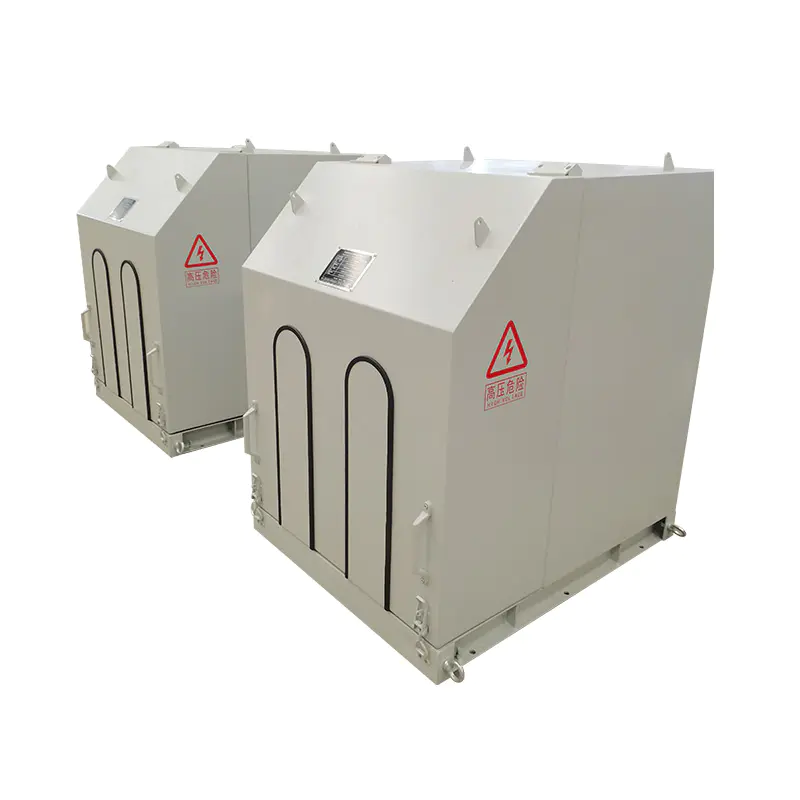
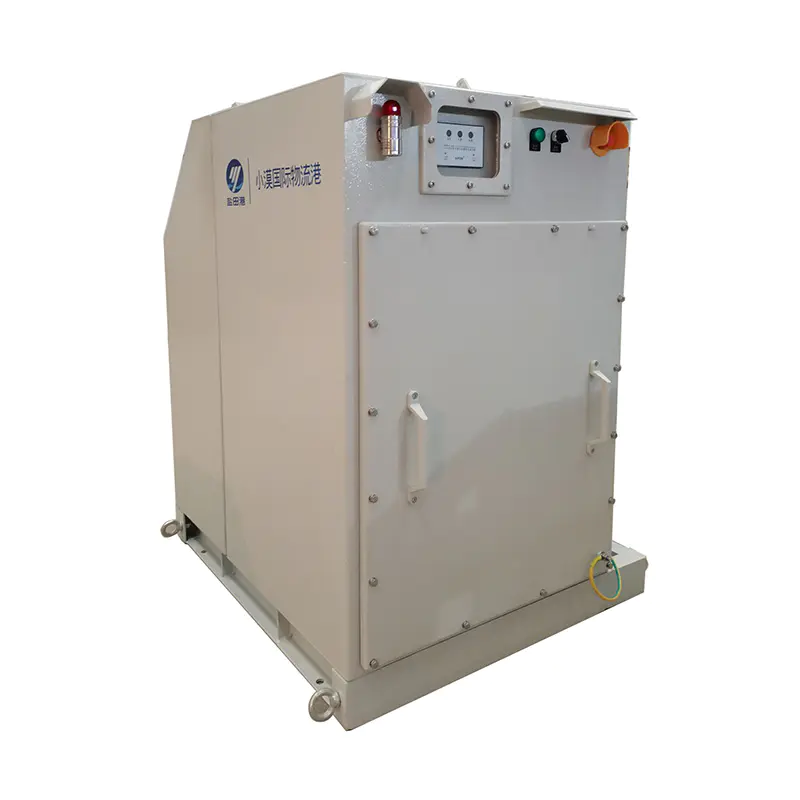
We build these machines in Jiangyin, on the south bank of the Yangtze, and our quality claim reaches back to 1956. For more than twenty years most of our work has centred on cable winches, motor-driven cable reels and shore power socket boxes, so what follows comes from jobs we have actually delivered rather than from a catalogue description.
Content
- 1 What a Cable Puller Tool Really Has to Do
- 2 The Main Types, and Where Each One Fits
- 3 Ports and Shore Power: the Busiest Working Ground
- 4 Marine and Shipboard Cable Handling
- 5 Mining: Pullers That Live in Dust and Grit
- 6 Safety Habits That Outweigh Any Spec Sheet
- 7 A Short Checklist Before You Commit
- 8 What Working With a Manufacturer Should Feel Like
What a Cable Puller Tool Really Has to Do
New buyers tend to fixate on pulling capacity, and capacity certainly matters. But it is only one of four jobs the tool performs every single day, and the other three are where most operating problems begin.
- Pull. Move a loaded cable at a steady, controlled line speed, without snatching or shock-loading the conductor.
- Hold. Keep the load parked when the operator lets go. A brake that creeps is a brake that will eventually hurt someone.
- Spool. Lay the cable evenly across the drum, layer by layer, so the insulation is not crushed against itself.
- Protect. Guide the cable in and out at a safe fleet angle and keep water, grit and sharp edges away from the jacket.
Get any one of those wrong and the cable pays for it — flattened insulation, a bruised conductor, a drum that spools unevenly and then chafes on the second layer. The repair bill usually arrives long after the winch has been signed off.
The Main Types, and Where Each One Fits
There is no single best configuration. The right choice depends on how far the cable travels, how often, how heavy it is, and what kind of power you have at the working position. This rough comparison is the one we use in first conversations with customers.
| Type | How it pulls | Typical use | What to watch |
|---|---|---|---|
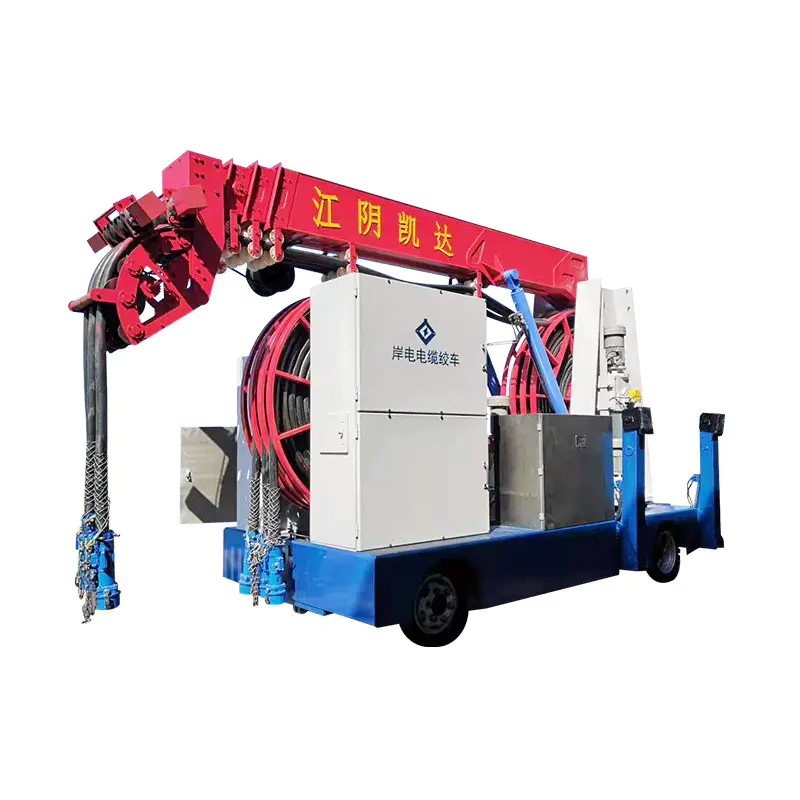
| Electric drum winch | Motor and gearbox driving a grooved drum | Shore power berths, long cable runs, general industrial | Brake condition, power supply quality |
| Self-propelled shore power winch | Powered travel along the quay plus a powered drum | Cruise terminals, large cables, long berths | Clear travel path, position sensing |
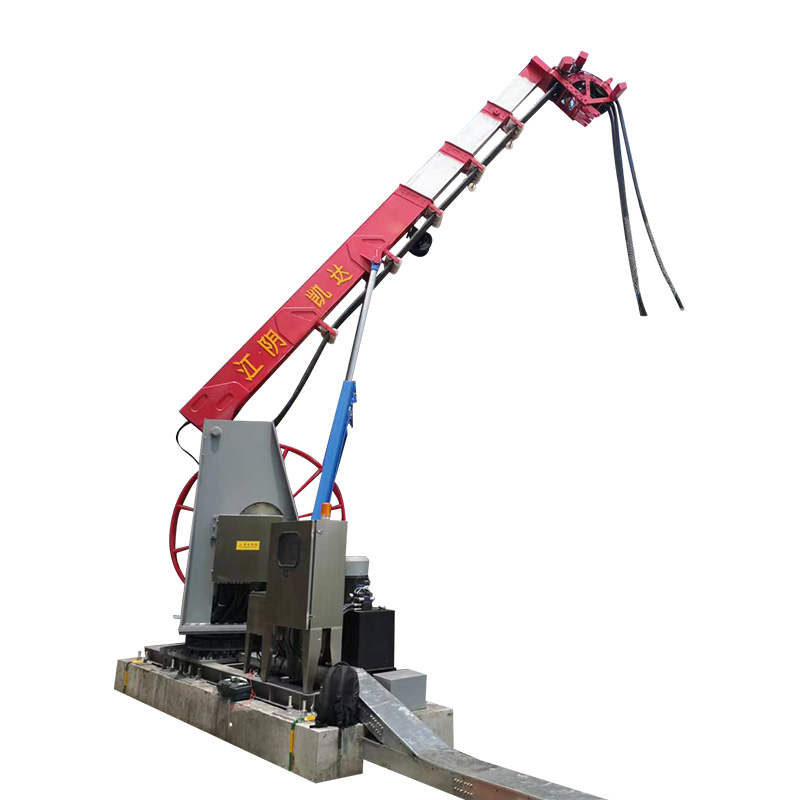
| Fixed telescopic arm winch | Extending arm reaches over the edge, drum does the pull | Fixed berths with a repeatable cable route | Arm reach versus actual berth geometry |
| Hydraulic winch | Hydraulic motor and control valve | Heavy loads, mining, remote locations | Oil cleanliness, hose inspection |
| Manual or ratchet puller | Hand crank or lever | Small cables, tight plant rooms, no power available | Operator fatigue, slow cycle times |
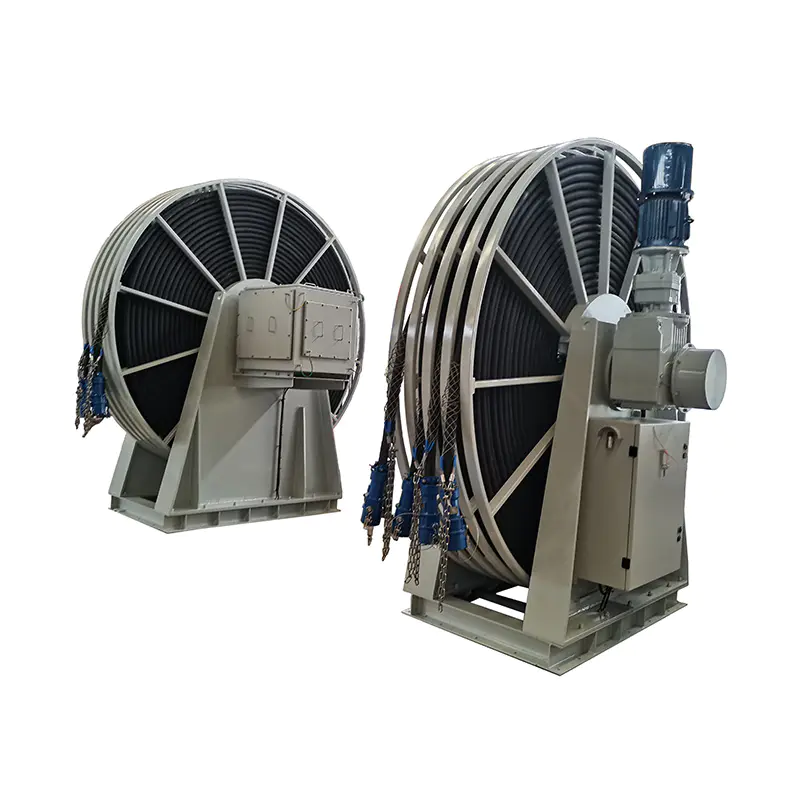
| Motor-driven cable reel | Spring or motor rewind on a travelling machine | Cranes, stackers, moving equipment | Slip ring wear, rewind tension |
Drive systems deserve their own line. Depending on the application and the specification, we use scroll spring, counterweight, hydraulic friction, hysteresis clutch, variable torque and variable-frequency control arrangements. A spring-return reel is elegant on a short, predictable travel; a variable-frequency drive is far kinder to a long shore power cable that has to accelerate smoothly with a ship waiting to connect.
If you want to see how these configurations are grouped in practice, our cable pulling winch range is organised by working scene rather than by tonnage alone.
Ports and Shore Power: the Busiest Working Ground
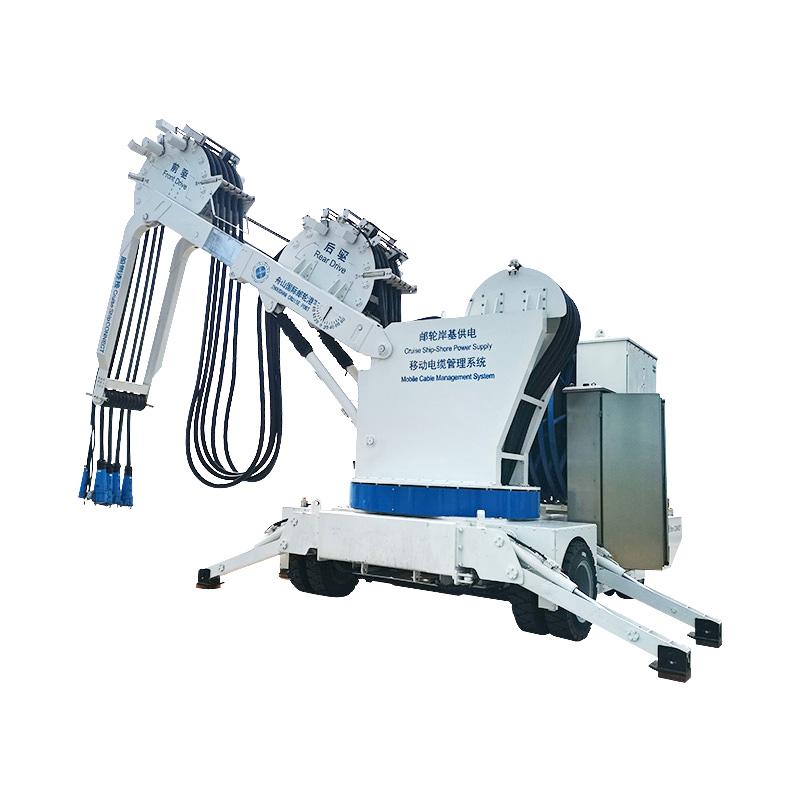
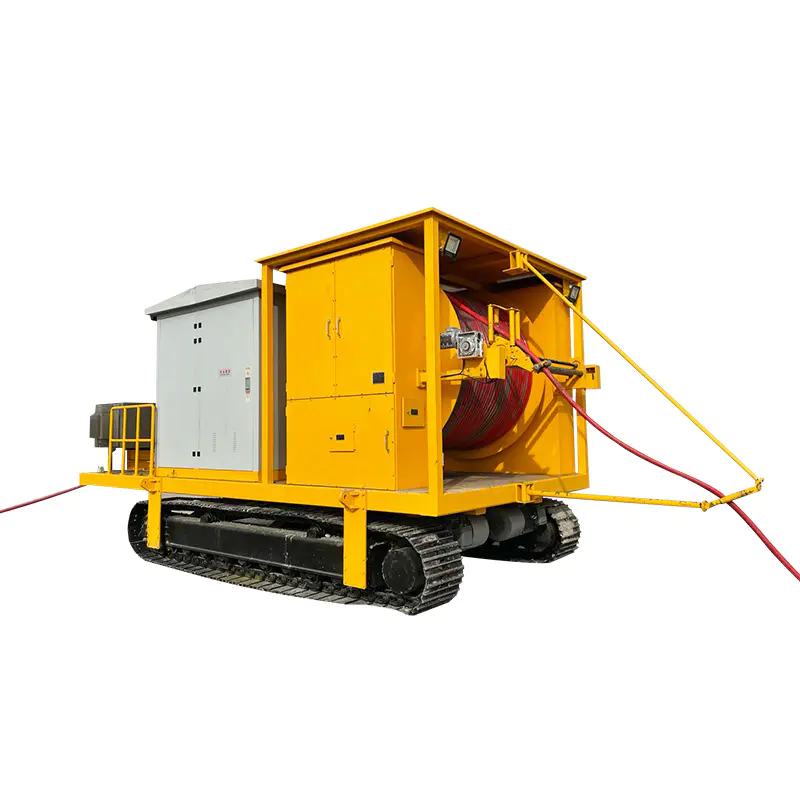
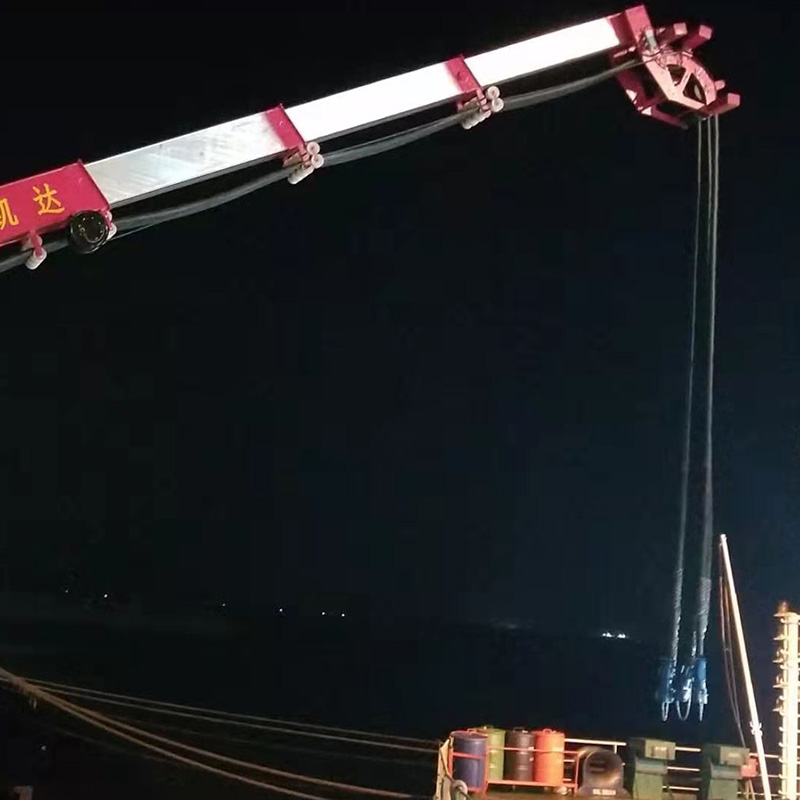 Self-Propelled Shore Power Cable Pulling WinchTravels to the vessel’s connection point and clamps, pulls and lays shore power cables, reducing manual handling at time-pressured berths.View Product →
Nowhere is cable handling under more time pressure than at a cruise or container berth. A vessel is alongside for a fixed window, the connection team is working to a schedule, and the cable itself may be thick, stiff and unforgiving in cold weather. That is the environment that shaped our self-propelled shore power cable pulling winch, which travels to the vessel's connection point instead of forcing the crew to drag cable by hand.
The practical benefit is not just speed. When the winch carries the weight, the cable leaves the drum at a consistent fleet angle and lands in the ship's socket box without being twisted or kinked. Over a season of calls, that difference shows up in cable life rather than in the purchase price.
Marine and Shipboard Cable Handling
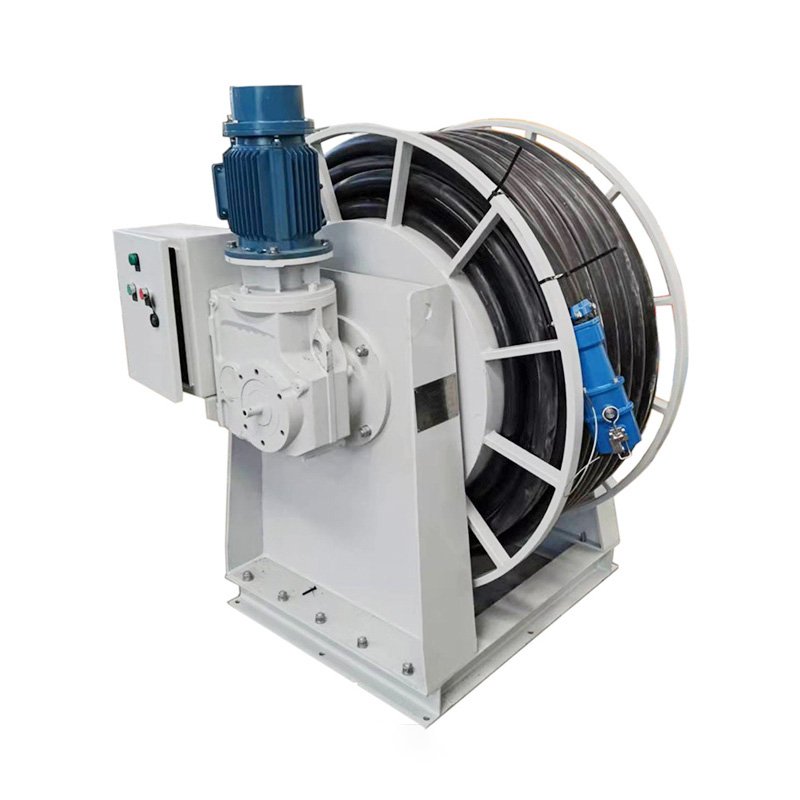 Marine Cable Pulling Winch for Shipboard Cable ManagementShip-mounted winch stores, collects and releases cable, with marine-duty materials and a control system for reliable shore-power connection in tight, salt-exposed spaces.View Product →
On board, space is tight and salt is everywhere. A marine cable pulling winch has to be compact enough for a deck or a machinery space, sealed well enough to survive spray, and predictable enough that a crew member who has never used one before can operate it safely after a short briefing.
We pay particular attention to how the cable is guided onto the drum. Rough guidance is the quiet cause of most jacket damage we are asked to investigate — the cable is fine on the first layer and ruined by the fifth.
Mining: Pullers That Live in Dust and Grit
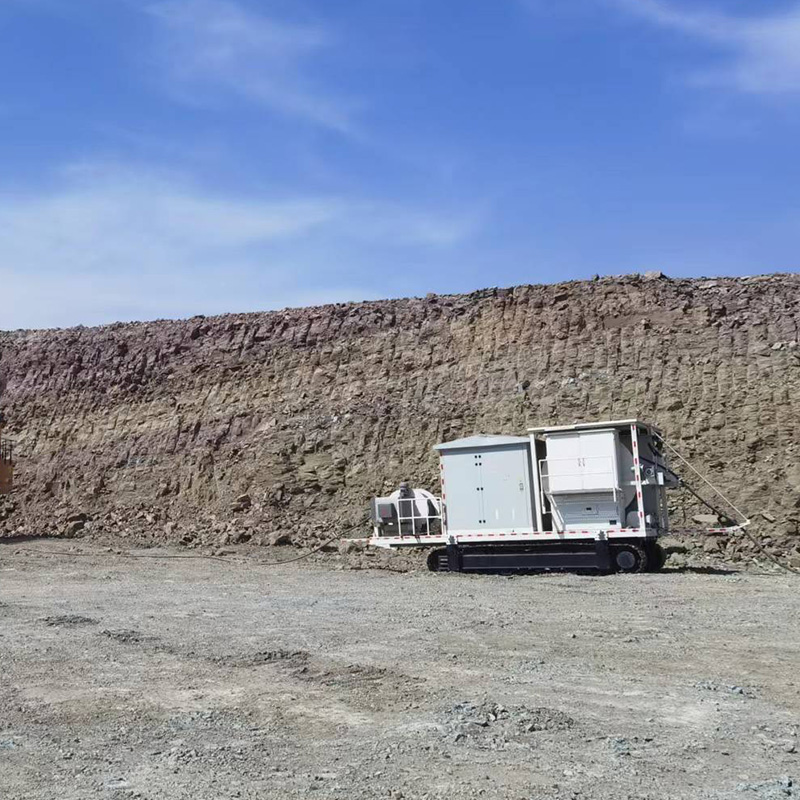 Electric Shovel Tail Cable Pulling WinchCrawler-mounted winch follows the shovel, transmits high-voltage power and manages tail cable through dusty open-pit mine conditions with main and auxiliary drums.View Product →
An electric shovel works in conditions that would destroy most port equipment. The tail cable is dragged through dust, over broken rock, and around a machine that swings constantly. A cable puller tool here has to hold tension as the shovel tramms, release cable smoothly, and keep grit out of the drum bearings.
Our electric shovel tail cable pulling winch was developed around that duty cycle, and it is one of the products where customer feedback has changed the design most over the years — usually in small, unglamorous ways that only an operator would notice.
Safety Habits That Outweigh Any Spec Sheet
The machines are only half the story. In our experience the incidents that nearly happen on site come from three habits: pulling at an angle the guide was never designed for, ignoring a brake that has started to creep, and letting an untrained person "just move it a little".
- Inspect the cable jacket before every shift, not after a fault.
- Keep people clear of the cable path and never stand inside a bight.
- Test the brake with a static load at the start of the shift.
- Record drum layers and cable length so the limit is known, not guessed.
None of this is complicated. It simply has to be written down and repeated until it becomes routine.
A Short Checklist Before You Commit
- Confirm the cable type, diameter, weight per metre and total length.
- Measure the real travel distance, including any vertical lift.
- Decide the required line speed and how often the cycle repeats per shift.
- Check the available power at the working position and its quality.
- Agree the mounting arrangement, and confirm the duty rating with a margin.
- Ask who will service the brake and the control system in year five.
Our longer selection guide to cable pulling winch types and specs goes through each of these points with worked examples, which is useful if you are writing a specification for tender.
What Working With a Manufacturer Should Feel Like
Our plant covers 25,000 square metres, with 12,500 square metres under roof, and we produce around 1,000 shore power cable winches a year alongside socket boxes and motor-driven reels. We are certified to ISO9001 and we build to the relevant national standards.
What that scale really means for a buyer is straightforward: if your berth has an unusual geometry or your shovel has a cable route nobody planned for, there is a reasonable chance we have already solved something similar, and if we have not, we can design around it rather than shrug. That is the honest version of the "custom" word that appears on so many websites.
If you take one thing from this article, let it be that a cable puller tool is a system rather than a number. Capacity, drum geometry, guidance, brake behaviour and the way the cable is spooled all decide whether the machine is still earning its keep a decade from now. Get those aligned with your actual working conditions, and the rest — the purchase order, the delivery date, the commissioning — tends to look after itself.