

 русский
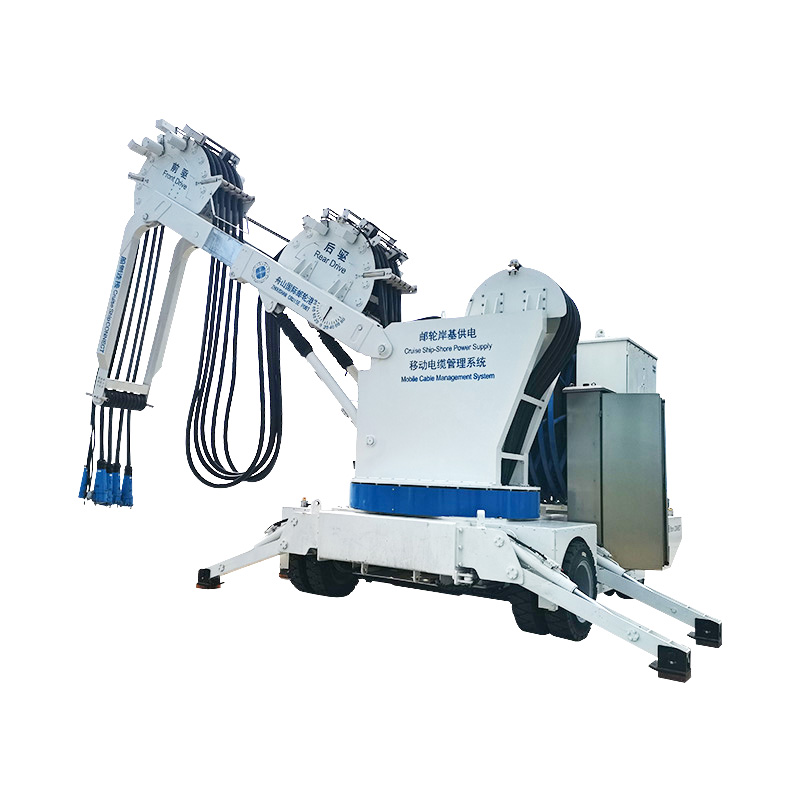
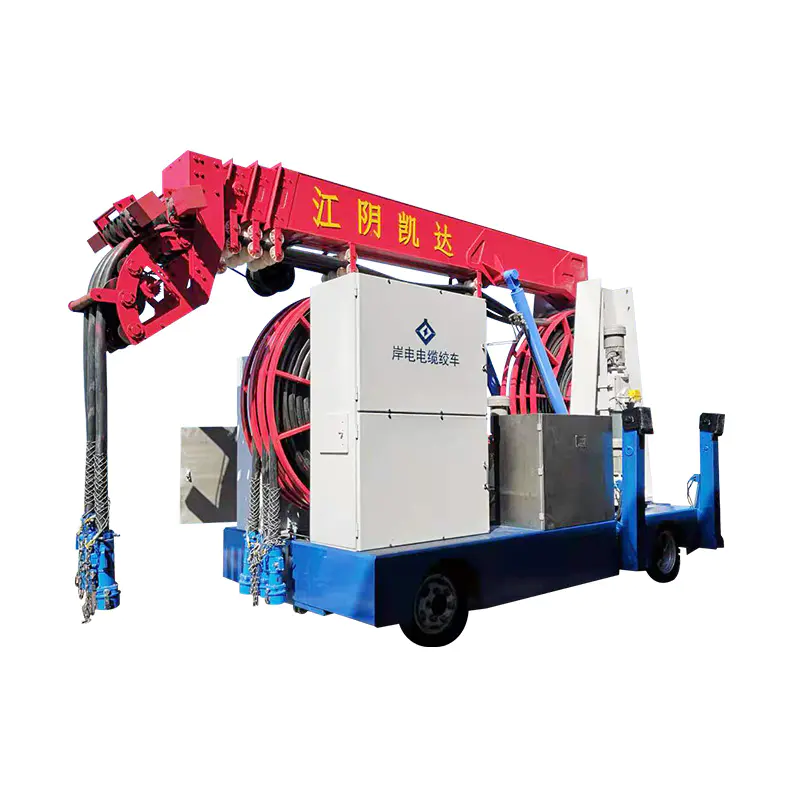
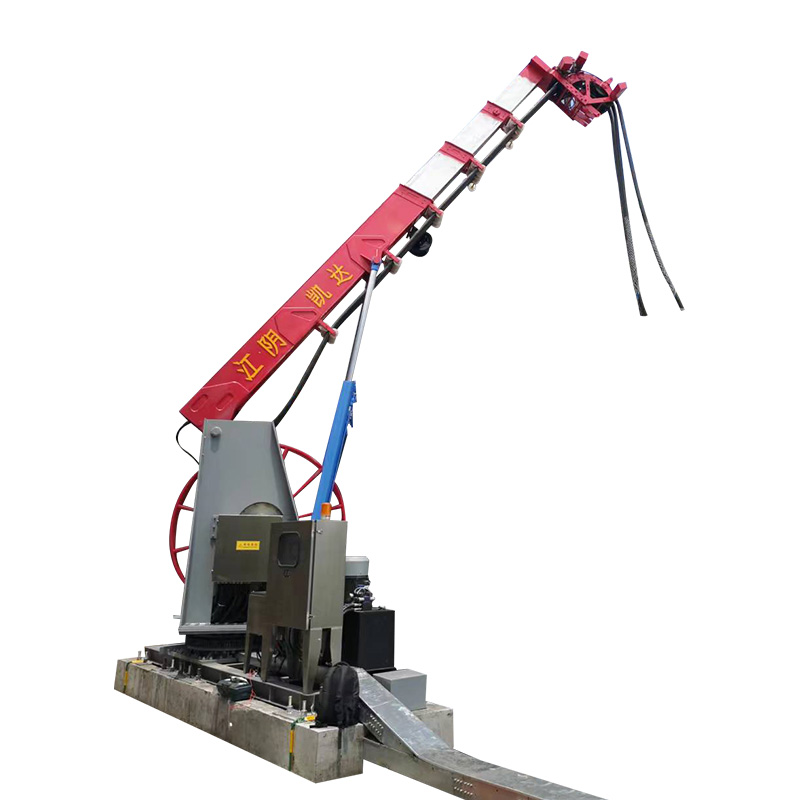
In the demanding landscape of industrial operations, efficiency, safety, and reliability are non-negotiable. Among the myriad of tools that power these sectors, the electrical cable winch stands out as a pivotal piece of equipment. Far more than just a simple pulling device, a modern industrial cable winch is an engineered system designed to handle the rigorous tasks of lifting, pulling, and tensioning heavy loads with precision. Its integration into sectors such as construction, mining, maritime, and utilities has revolutionized how heavy cables, wires, and other loads are managed. This article delves deep into the core advantages of utilizing these powerful tools, exploring how they enhance operational workflows, mitigate risks, and contribute to long-term project economics. We will dissect their benefits across various dimensions, providing a comprehensive guide for professionals seeking to optimize their material handling processes. Understanding the full scope of an electrical cable winch's capabilities is the first step toward unlocking greater productivity and safety on the job site.
Content
- 1 Enhanced Operational Efficiency and Precision Control
- 2 Superior Safety and Risk Mitigation
- 3 Versatility and Adaptability Across Industries
- 4
- 5 FAQ
- 5.1 What is the difference between an electrical cable winch and a hand-operated winch?
- 5.2 How do I choose the right capacity for an industrial electrical winch?
- 5.3 Can an electrical cable winch be used for both pulling and lifting?
- 5.4 What maintenance does an industrial electrical winch require?
- 5.5 Are there specific winches recommended for towing applications?
Enhanced Operational Efficiency and Precision Control
The primary advantage of an electrical cable winch lies in its profound ability to streamline complex and labor-intensive tasks. Unlike manual methods or less sophisticated equipment, an electric winch provides consistent, controllable power at the flip of a switch. This translates directly into faster project completion times and reduced physical strain on personnel. In applications like pulling cables through long conduits or setting up suspension lines, the precision offered by variable speed controls and remote operation is invaluable. Operators can make minute adjustments, handle delicate materials without damage, and execute pulls with a level of accuracy that manual teams simply cannot match. This precision is further amplified when integrating a winch with automatic braking system, which ensures the load is held securely at any point during the operation, preventing slippage and allowing for precise positioning. The cumulative effect is a significant reduction in project timelines and rework, leading to direct cost savings and the ability to undertake more projects within the same timeframe.
- Consistent Power Output: Delivers uniform pulling force, eliminating the fatigue and inconsistency associated with human labor.
- Variable Speed Controls: Allows for slow, careful starts and precise positioning, crucial for handling sensitive or expensive cables.
- Remote Operation Capability: Enhances safety and allows for optimal viewing angles, improving control accuracy.
- Reduced Manual Labor: Frees skilled workers from strenuous pulling tasks, allowing them to focus on supervision and more technical aspects of the job.
- Repeatable Processes: Enables the establishment of standardized, efficient procedures for repetitive pulling tasks.
Comparing Control Features: Manual Lever vs. Electric Remote
When selecting an electrical cable winch, the control method is a critical consideration impacting both efficiency and safety. Traditional lever-operated winches require an operator to be directly adjacent to the winch, which can be hazardous during high-tension operations. In contrast, modern electric winches often come with remote control options. This table outlines the key differences, highlighting why remote systems, especially those paired with robust braking, are preferred for complex industrial applications.
| Control Feature | Manual Lever Control | Electric Remote Control |
| Operator Position | Must be at the winch. | Can be at a safe distance with clear sightlines. |
| Precision | Moderate; depends on operator strength and feel. | High; fine-tuned via electronic controls. |
| Integration with Braking | Manual engagement/disengagement. | Often integrated with an automatic braking system for immediate hold. |
| Multi-tasking Potential | Low; operator is dedicated to winching. | High; one operator can supervise multiple aspects. |
| Safety Profile | Lower due to proximity to load and cable. | Significantly higher due to distance from potential snap-back zones. |
Superior Safety and Risk Mitigation
Industrial environments are fraught with potential hazards, particularly when moving heavy loads. The implementation of an electrical cable winch systematically addresses many of these risks. The most glaring danger in cable pulling is snap-back—the catastrophic, whipping recoil of a cable or rope if it fails under tension. Manual pulling exposes workers directly to this zone of danger. An electric winch, by design, places a machine between the load and the personnel. Furthermore, advanced safety features are integral to their design. A winch with automatic braking system is paramount, as it immediately locks the drum when power is cut or if a power failure occurs, preventing uncontrolled descent or movement. This is a critical safeguard during overhead cable installation, where a dropped load could have severe consequences. Additionally, features like overload protection circuits prevent the motor from straining beyond its capacity, reducing the risk of mechanical failure. For operations involving underground cable pulling, where visibility is low and alignment is critical, the controlled, steady pull of a winch minimizes the chance of cable jackknifing or damaging the conduit. Ultimately, these systems create a more predictable and controlled environment, which is the cornerstone of industrial safety protocols.
- Elimination of Manual Strain Injuries: Prevents back injuries and musculoskeletal disorders common in manual pulling.
- Contained Failure Modes: In the event of component failure, the winch structure and brakes contain the energy, unlike a free-snapping cable.
- Controlled Load Management: Enables slow, deliberate lowering and raising, preventing sudden shifts that can destabilize a work area.
- Enhanced Visibility for Operators: Remote controls allow operators to position themselves where they have the clearest, safest view of the entire pull path.
- Compliance with Safety Regulations: Helps meet stringent OSHA and other regulatory standards for material handling and worker safety.
Safety Feature Breakdown for Different Applications
The specific safety requirements for a winch can vary depending on its primary use case. A winch designed for towing a vehicle with a winch might prioritize portability and quick deployment, while one for permanent industrial overhead cable installation will focus on maximum braking torque and duty cycle. This table compares key safety considerations across three common industrial scenarios, emphasizing the need to match the equipment's features to the task's inherent risks.
| Application | Primary Safety Risks | Essential Winch Safety Features |
| Overhead Cable Installation | Falling loads, swing, electrical hazards. | Fail-safe automatic brake, overload sensor, remote control with emergency stop, durable wire rope. |
| Underground Cable Pulling | Conduit damage, cable seizure, confined space hazards. | Precise speed control, line speed/load monitoring, spark-resistant options (for hazardous areas), durable cable guide. |
| Recovery/Towing (e.g., machinery) | Snap-back, vehicle instability, anchor point failure. | Dynamic braking, synthetic rope (safer if it breaks), hawse fairlead to protect rope, wireless remote. |
Versatility and Adaptability Across Industries
The utility of an electrical cable winch extends far beyond a single function, making it a highly versatile capital investment. Its fundamental purpose—to exert a controlled linear force—is applicable in countless scenarios. In construction, it's used for positioning steel beams or lifting machinery. In telecommunications, it's indispensable for underground cable pulling over long distances. For utilities, it facilitates the stringing of power lines between poles during overhead cable installation. In warehouse settings, a winch for warehouse lifting tasks can move heavy inventory or equipment vertically. Even in maintenance and recovery, the same winch used for industrial pulls can be adapted for towing a vehicle with a winch that has broken down on site. This cross-functional capability is enhanced by a wide range of attachments and configurations, such as different drum types (e.g., split drum for parallel pulls), various cable or synthetic rope options, and mounting solutions (truck-mount, portable cart, or fixed pedestal). This adaptability ensures that a well-chosen winch does not become a single-use tool but a core component of a flexible material handling strategy.
- Multiple Mounting Options: Can be permanently installed, mounted on vehicles, or set up on portable trolleys for job-site mobility.
- Broad Capacity Range: Available from lightweight models (a few hundred lbs) to massive industrial units capable of pulling dozens of tons.
- Attachment Ecosystem: Compatible with sheaves (blocks), snatch blocks, slings, and grips to tackle complex rigging setups.
- Power Source Flexibility: Can run on standard single/three-phase AC power, DC battery power (for vehicle-mounted units), or even generators for remote sites.
- Duty Cycle Variability: Models are available for intermittent use, frequent use, or severe-duty continuous operation, allowing selection based on operational tempo.
FAQ
What is the difference between an electrical cable winch and a hand-operated winch?
The core difference lies in the power source and its implications for performance. A hand-operated (manual) winch uses a crank lever and mechanical gearing, requiring sustained human effort. Its pulling power and speed are limited by the operator's strength and stamina. An electrical cable winch, powered by an electric motor, provides consistent, higher pulling force with minimal operator effort. It offers superior control through variable speed buttons and often includes critical safety features like an automatic braking system. While manual winches are suitable for very light, infrequent tasks, electrical winches are the standard for industrial applications due to their efficiency, power, reliability, and enhanced safety profile, especially for tasks like overhead cable installation or long-distance underground cable pulling.
How do I choose the right capacity for an industrial electrical winch?
Selecting the correct capacity is critical for both safety and performance. The key is to calculate the maximum expected load, not the average load. Start by determining the total weight or pulling resistance (including friction from conduits, drag on the ground, etc.) of what you need to move. As a fundamental safety rule, the winch's rated line pull capacity should be at least 1.5 times this maximum calculated load. This safety factor accounts for dynamic forces, unexpected resistance, and ensures the winch is not operating at its absolute limit, which prolongs its life. For example, if you are performing underground cable pulling and estimate a maximum pull force of 4,000 lbs, you should select a winch with a minimum capacity of 6,000 lbs. Always consult the manufacturer's specifications regarding duty cycle, as a winch rated for a 6,000-lb single-line pull may have a different rating for continuous use.
Can an electrical cable winch be used for both pulling and lifting?
This is a crucial distinction with major safety implications. While many electric winches are mechanically capable of both pulling and lifting, they are not automatically rated or certified for overhead lifting of personnel or critical loads. A standard electrical cable winch designed for material pulling typically lacks the specific safety certifications, redundant braking systems, and sometimes the construction standards required for a dedicated winch for warehouse lifting or construction hoisting. Using a pulling winch for overhead lifting can be extremely dangerous and is often a violation of safety regulations. If lifting is required, you must select a winch that is explicitly designed, tested, and labeled as a "hoist" with a defined safety factor and compliance with standards like ASME B30.7.
What maintenance does an industrial electrical winch require?
Regular maintenance is essential for safety, reliability, and longevity. A basic regimen includes:
- Visual Inspection: Before each use, check the cable/rope for kinks, fraying, or broken strands. Inspect hooks, latches, and mounting hardware for cracks or deformation.
- Lubrication: Follow the manufacturer's schedule for greasing gears and bearings. Lightly lubricate the wire rope with a approved product to reduce internal friction and prevent rust (note: synthetic rope requires different care).
- Brake Test: Regularly test the automatic braking system by applying a light load and engaging the brake to ensure it holds securely without slippage.
- Electrical Components: Keep motors and control boxes free of debris and moisture. Check cable connections for tightness and signs of wear or corrosion.
- Professional Servicing: Schedule annual or bi-annual inspections by a qualified technician to check internal gears, motor brushes, and structural integrity.
Proper maintenance is especially important for winches used in harsh environments like underground cable pulling or those subjected to frequent, heavy use.
Are there specific winches recommended for towing applications?
Yes, while a general-purpose industrial electrical cable winch can be used, winches marketed for recovery and towing often have optimized features. For towing a vehicle with a winch, key considerations include: a high IP rating for water and dust resistance; a powerful DC motor that runs off a vehicle's battery; a fast line speed under low load for quick cable deployment; and a reliable dynamic braking system. Many recovery winches use synthetic rope, which is lighter, safer (it sags if it breaks rather than whipping), and floats. They also commonly feature wireless remotes for maximum operator mobility and safety during vehicle recovery operations. It's vital to ensure the winch is properly mounted to a reinforced structure on the towing vehicle to handle the immense forces involved.