

 русский

Fiber optic cable is light, but it is not forgiving. It tolerates steady tension; it does not tolerate a shock load, a sharp bend, or an operator who guesses. That is why the best fiber pulling machine is rarely the one with the highest pull force. It is the one that keeps tension predictable from the first meter to the last.
What crews call a fiber pulling machine is often a system: a capstan puller, a drum winch, a cable blower, or a reel and tensioner package. The right choice depends on route length, duct condition, cable weight, permitted tension, and the space available at the entry pit.
Content
Start With the Fiber, Not the Machine
Before comparing machines, collect the cable data sheet. You need the diameter and weight, minimum bend radius, maximum pulling tension, and the maker's guidance on pulling grips. Those figures set the working envelope. A machine that can pull 10 kN may be far too powerful for fiber; force capacity is not a badge of quality. Control is.
Fiber pulls usually need a slow, smooth start and a steady line speed. The machine should let an operator set a tension limit and stop before it is reached, not after the cable has been stressed. A load cell with a visible readout and an adjustable trip point is easier to trust on a busy site than an analog gauge alone. Check the route as well: duct diameter, bends, elevation changes, and the condition of existing innerduct all change the required pull.
Four Common Fiber Pulling Approaches
Most crews work with one of four approaches, and a long project may use more than one.
| Approach | Best for | Main watch point |
|---|---|---|
| Capstan puller | Long duct runs and continuous rope pulls | Rope slip and tension spikes at start-up |
| Drum winch | Straight pulls, risers, recovery work | Drum capacity and uneven line speed |
| Cable blowing | Microduct and lightweight cable | Air volume, duct seals, and cable fit |
| Reel and tensioner | Controlled payout from a large reel | Back tension and reel braking |
A capstan puller wraps a rope or pulling line around a powered drum. Because the line does not store on a drum, the pull can be long and continuous; the trade-off is rope management and capstan sizing. A drum winch stores the line as it pulls, which makes it compact for shorter or vertical pulls but demands attention to spooling and drum speed. Cable blowing is not a pulling machine in the strict sense, but it is often better for microduct because air carries the cable while a feed unit controls speed. A reel and tensioner package keeps the cable under controlled back tension during payout, especially when the reel is large.
Where a Cable Winch Fits in Fiber Work
A cable pulling winch is most useful on straight duct runs, manhole-to-manhole pulls, risers, and recovery work where a pre-laid rope has to do the work. It can also serve as the prime mover for a capstan or pulling frame. Match the winch to the job; do not force fiber into a machine built for heavier cable.
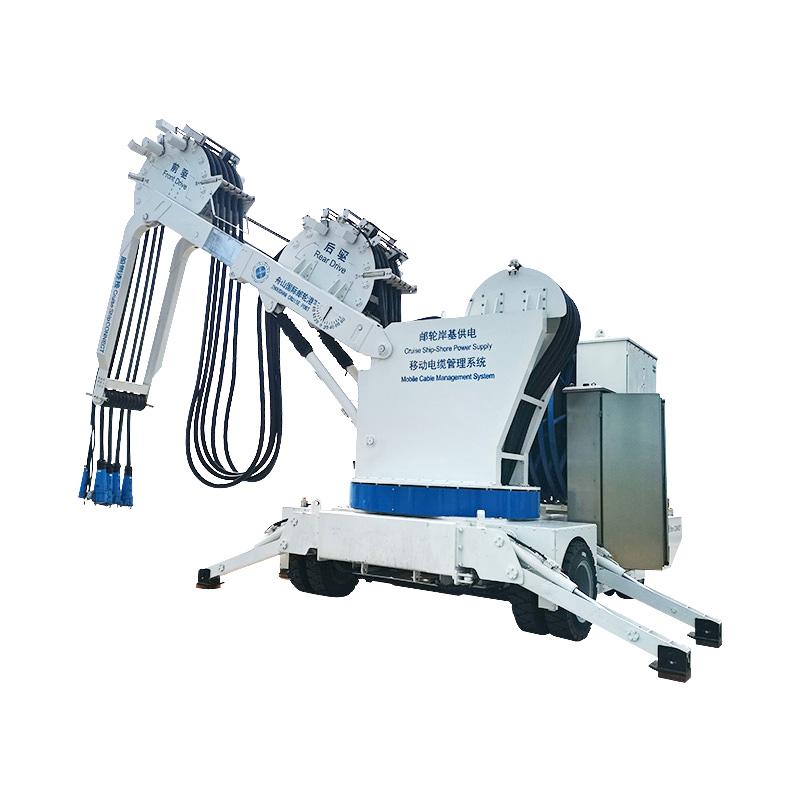
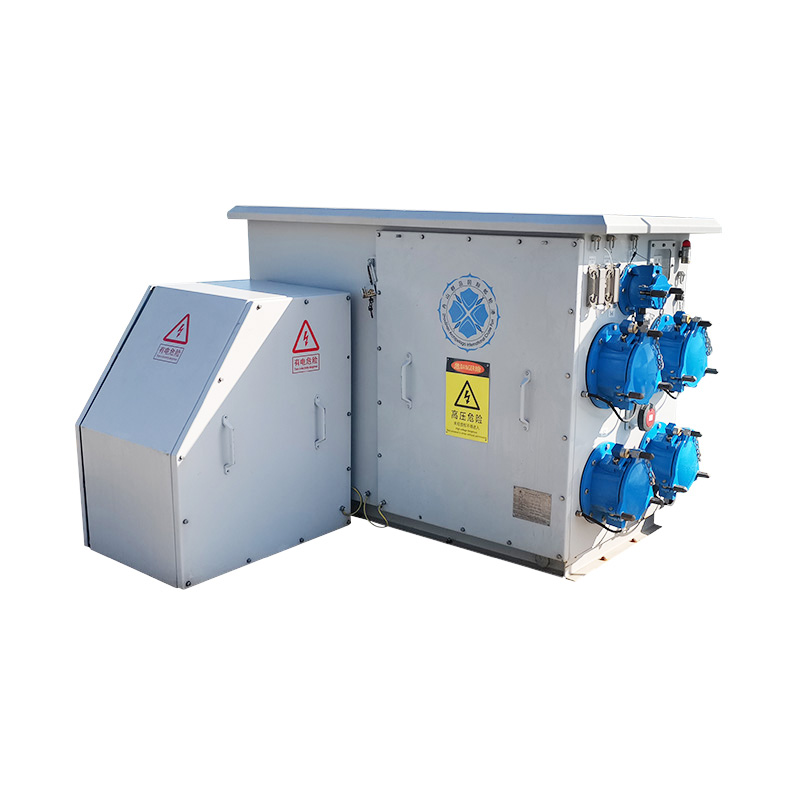
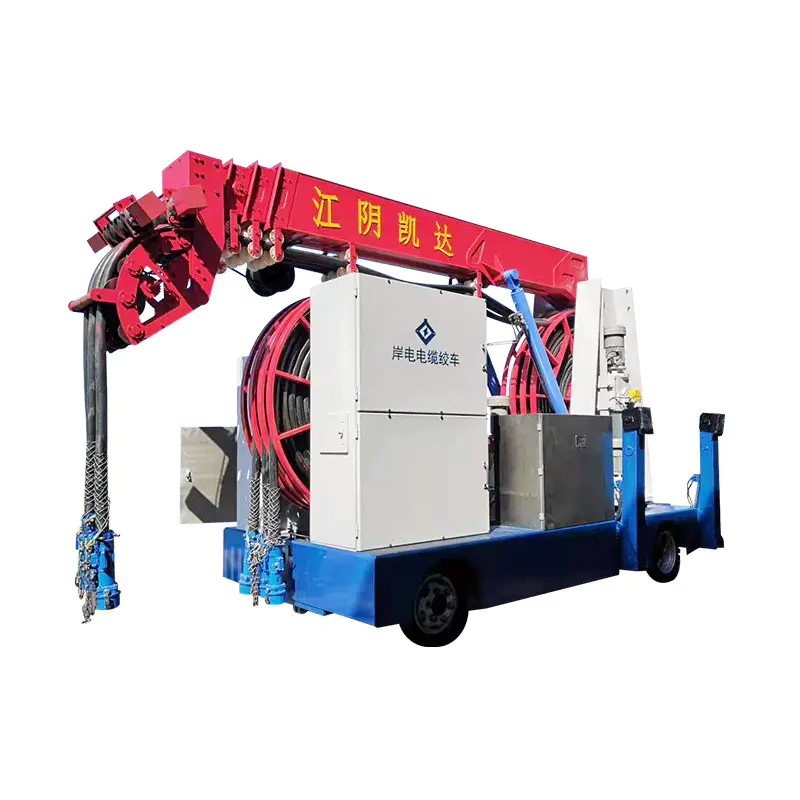
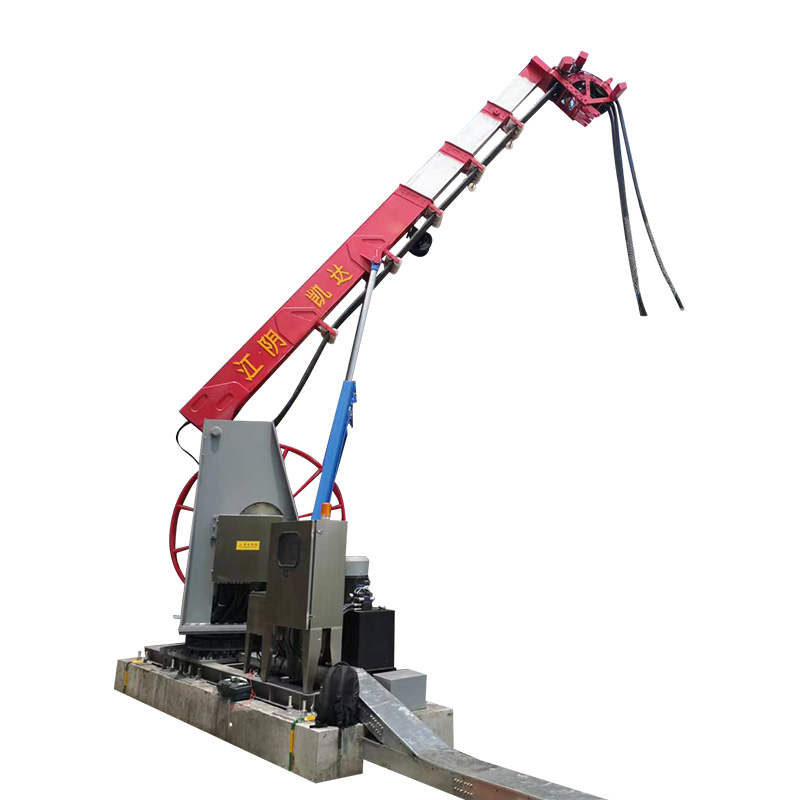
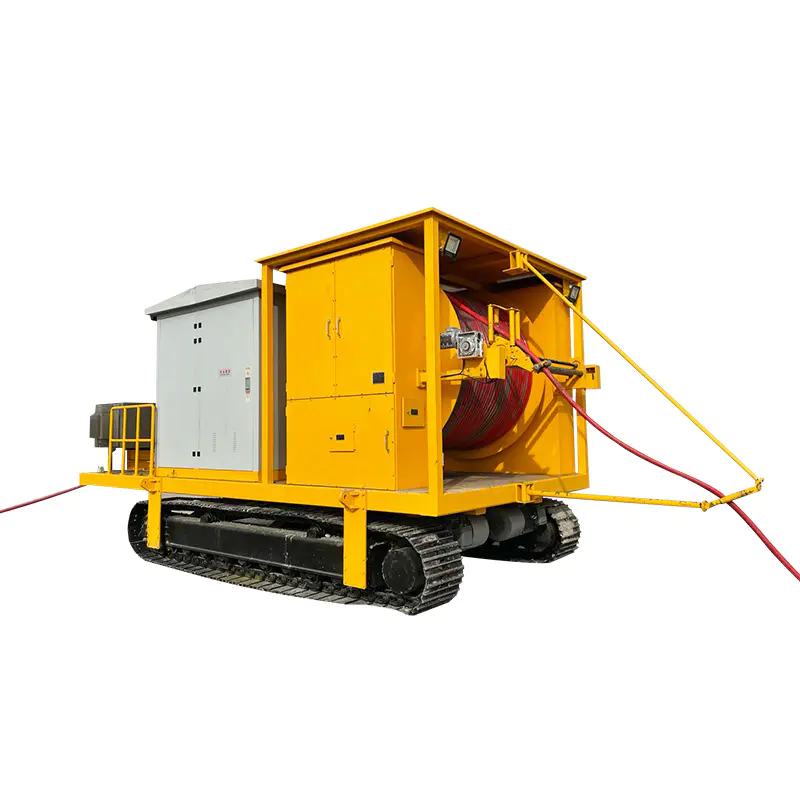
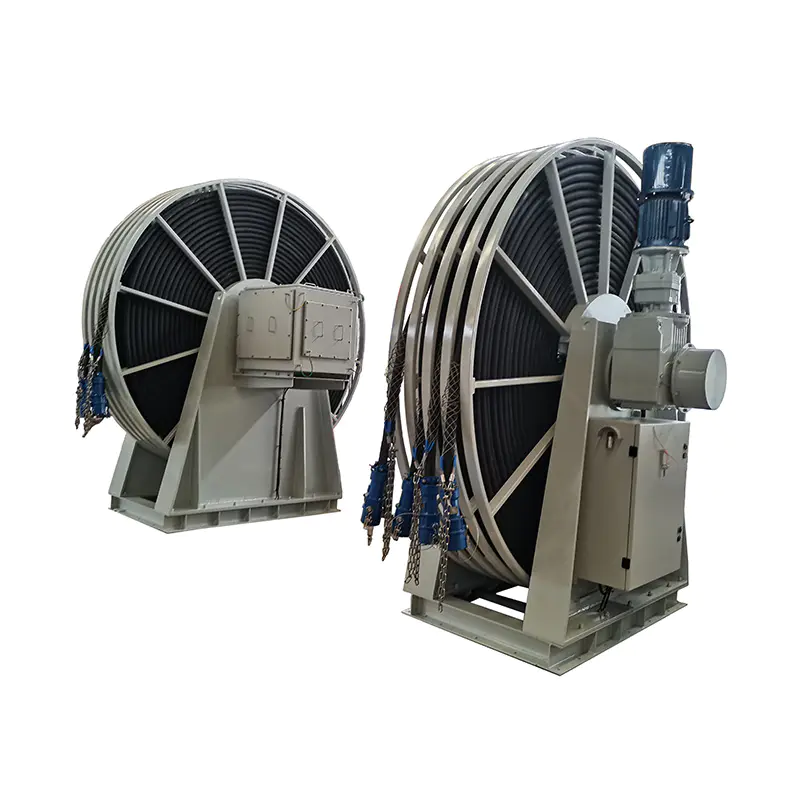
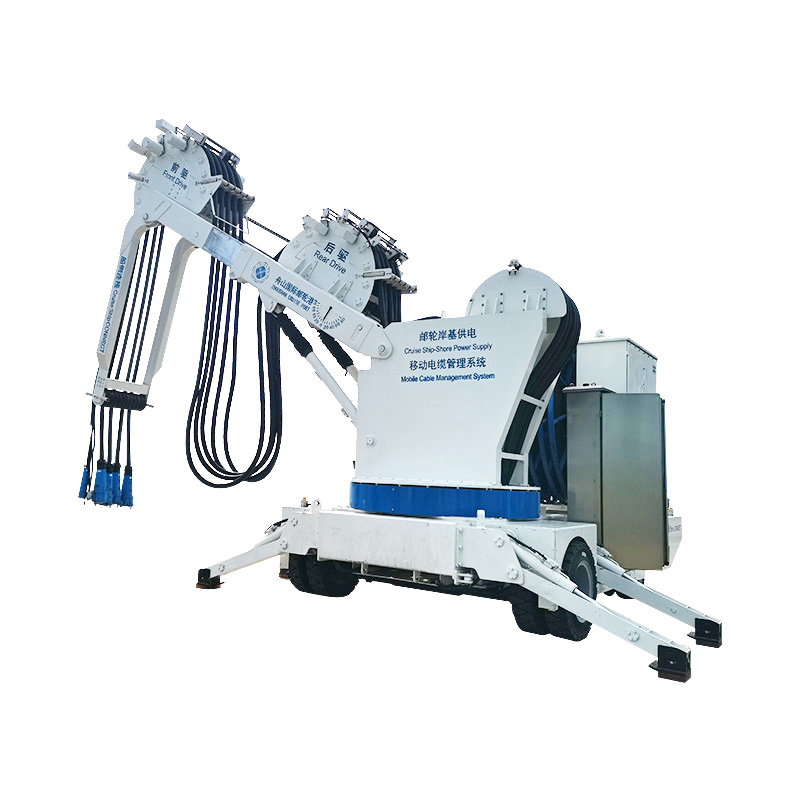 Variable-Frequency Cable Pulling WinchesCable winch category covering shore power, marine, and industrial variants with constant-tension drive control; useful for comparing drive and brake arrangements for duct pulls.View Product →
We build cable pulling winches for demanding cable handling in shore power, marine, and industrial applications. The same engineering points apply here: a stable frame, a controlled drive, a brake that holds, and a clear operating position. For fiber, specify a tension limit well below the cable maximum and a speed range that lets the operator stop quickly. If a standard unit is close but not exact, ask about the drive and control arrangement rather than choosing the largest model. Do not assume a heavy-cable winch is gentle on fiber just because it has a lower speed setting. Check minimum controllable pull, tension-setting resolution, and brake behavior when the load changes.
Pull Force, Speed, and Reel Capacity
Pull force is not a single number. It changes as the cable enters the duct, passes bends, and fills more of the available space. The machine must hold a steady tension at the low end, not only at its rated maximum. Use a load cell or calibrated dynamometer in line with the pull, and record peak tension at each bend or manhole.
Speed should be adjustable and, in most fiber work, conservative. A slow pull gives the crew time to watch the duct entry, listen for scraping, and stop before a problem becomes damage. Soft start and soft stop are more valuable than high line speed. If the machine has a remote pendant, confirm it works from the position where the operator can see the cable.
Reel capacity matters when cable is supplied on a large drum. Check reel diameter, cable length, weight, and clearance to rotate. The pulling machine and reel stand should be treated as one system.
Protecting the Cable at the Pull Head
Use a pulling grip approved for the cable construction, and follow the maker's instructions for jacket and strength members. A swivel helps keep torque away from the cable. A breakaway link or tension fuse can release before the cable reaches its limit. Lubrication should be compatible with the jacket and duct, and it should not be used to pull through a blockage. If tension rises faster than expected, stop and investigate.
Job-Site Setup and Safety
Set the machine on firm ground, anchor it against the expected pull, and keep the line clear of people and traffic. The operator should have a clear view or radio contact with the reel tender and the manhole attendant. Agree on a stop signal before the pull starts. A tension limit is only useful if everyone knows it. Brief the crew on maximum pull, planned speed, and the action to take if the load rises. Our cable winch safety tips cover checks that should happen before every pull, including anchoring, brake tests, and communication.
A Practical Buying Checklist
Use this list to compare machines on the points that affect installation, not just headline pull rating.
- Maximum and minimum controlled pull, with a tension limit that can be set below the cable's rating.
- Speed range and soft-start behavior, so the cable does not see a shock load.
- Brake type and holding performance, especially on slopes or vertical pulls.
- Drum or capstan capacity for the rope, cable, and pull length.
- Readable tension display and a stop device within reach of the operator.
- Anchoring points and frame stability for the expected load angle.
- Compatibility with the pulling grip, swivel, and breakaway link.
- Service access, spare parts, and clear operating instructions.
For a short, simple route, a compact capstan or small drum winch may be enough. For long duct, a large reel, or several bends, the machine and tension monitoring deserve more attention. Ask for the control scheme, tension-setting method, and brake test procedure in writing. Custom configuration is how the machine is kept inside the cable's limits.
The Bottom Line
A fiber pulling machine should be judged by how gently and repeatably it moves cable, not by how much force it can produce. Start with the fiber's tension and bend limits, inspect the route, choose a method that matches the duct and reel plan, and set the machine to stop before the cable is stressed. If you are comparing cable winches for a fiber route, begin with the pull force, speed range, and tension control you actually need. A sensible match will do more for installation quality than a larger machine with a less controllable drive.