

 русский
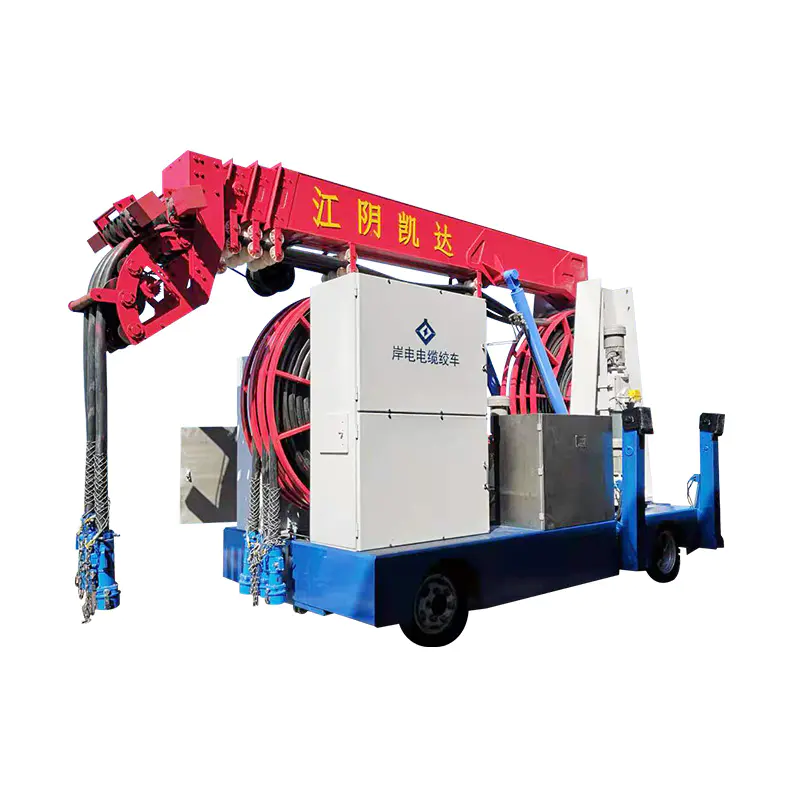
The correct electrical cable winch for continuous cable laying is defined by its first-layer pull capacity at 1.5 times the maximum cable tension and an S3 duty cycle rating of at least 40%. A 3.7 kW motor driving a planetary gearbox through a failsafe electromagnetic brake will spool 500 meters of 35 mm diameter armored cable at a constant speed of 8 meters per minute without overheating the windings, provided the drum core diameter is at least 20 times the cable diameter.
Content
- 1 First-Layer Pull and How It Differs from Lifting Winches
- 2 Drum Core Diameter and Cable Bend Radius Protection
- 3 Motor Duty Cycle and Thermal Overload Prevention
- 4 Brake Systems and Static Holding Requirements
- 5 Spooling Gear and Level-Wind Mechanisms
- 6 Electrical Control and Variable Speed Integration
- 7 Load Sensing and Tension Cut-Out
- 8 Daily Pre-Start Inspection Points
First-Layer Pull and How It Differs from Lifting Winches
An electrical cable winch is rated by pull on the first layer of rope on the drum, not by suspended load. Cable laying involves high horizontal drag, especially when pulling armored subsea cables across rollers. A winch with a first-layer pull of 5,000 kg on a 300 mm core can handle a cable tension of 3,300 kg after the fourth layer is wound on, due to the increased effective drum diameter reducing mechanical advantage.
Unlike a lifting winch that sees peak load only at lift-off, a cable winch must sustain the pull force for hours. This necessitates a motor with a service factor of 1.25. A motor rated at 7.5 kW with an SF of 1.25 can deliver 9.4 kW continuously, covering the thermal reserve needed when the cable snags momentarily on the seabed.
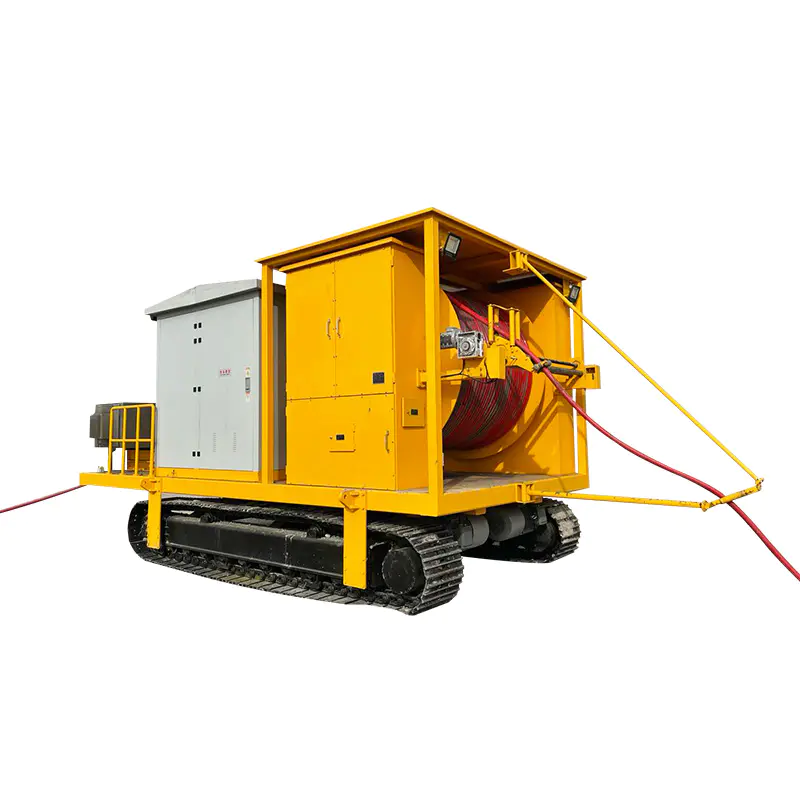
Drum Core Diameter and Cable Bend Radius Protection
The drum core is the primary factor that prevents damage to the cable. The minimum bend radius of a power or control cable is typically 10 to 15 times its outer diameter. A winch drum must therefore have a core diameter no smaller than 20 times the cable diameter for dynamic spooling under tension. For a 40 mm cable, the core must be at least 800 mm.
Using a smaller core leads to inner layer crushing. In a documented case involving a trailing power cable for a stacker reclaimer, a 600 mm drum repeatedly failed a 38 mm cable within 1,200 spooling cycles. Upgrading to a 900 mm core eliminated the crush failure entirely over a subsequent 4,500 cycles.
Motor Duty Cycle and Thermal Overload Prevention
Cable winch motors operate under the S3 intermittent periodic duty classification. A typical label reads S3-40%, 10 minutes, meaning the motor can run at full load for 4 minutes within any 10-minute cycle without exceeding its insulation class temperature rise limit. Selecting a motor with a 60% duty cycle for a winch used in repetitive cable trenching prevents nuisance tripping of the thermal overload relay.
The table below matches motor power to pull force and line speed for common cable spooling operations, assuming an S3-40% rating and a service factor of 1.0 for the gearbox.
| Motor Power (kW) | First-Layer Pull (kg) | Line Speed at Full Load (m/min) | Typical Cable OD Range (mm) |
|---|---|---|---|
| 1.5 | 500 | 6 | 10 to 15 |
| 3.7 | 1,500 | 8 | 18 to 28 |
| 7.5 | 3,200 | 10 | 30 to 42 |
| 15.0 | 6,500 | 12 | 45 to 65 |
Brake Systems and Static Holding Requirements
An electrical cable winch must hold the full reel of cable stationary when power is removed, even on an incline. The standard is a spring-applied, electrically released DC brake mounted directly on the motor end bell. The static holding torque must be at least 1.5 times the maximum drum torque generated by the top layer of cable at full pull.
A band brake on the drum flange serves as an emergency secondary system. During an acceptance test of a 10-tonne pull winch, the DC brake alone held 105% of rated load for 30 minutes with zero drum rotation. When the band brake was applied after a simulated power failure, the combined brake system held a static load of 15 tonnes before the cable anchor slipped.
Spooling Gear and Level-Wind Mechanisms
Random winding causes cable overlap that cuts into the jacket during tensioned payout. A driven level-wind mechanism that traverses the drum at a synchronized rate is essential for flat cable or when spooling onto a smooth drum. The level-wind pitch must match the cable diameter plus a clearance of 1 mm to 2 mm to prevent pinching.
For a 32 mm round cable, a level-wind with a lead screw pitch of 33 mm and a bidirectional nut eliminates gaps. Field data from a cable-laying barge showed that a synchronized level-wind reduced the payout jump phenomenon from 3 occurrences per kilometer to zero, preventing sharp tension spikes that previously damaged the insulation resistance of the cable.
Electrical Control and Variable Speed Integration
Direct-on-line starting of a large winch motor sends a mechanical shock through the gear train. A variable frequency drive allows a soft-start ramp of 3 seconds and a stop ramp of 2 seconds, reducing peak inrush current from 6 times full load current to 1.5 times. This protects the cable from a sudden jerk that can separate the conductor from the insulation.
The control pendant must include an emergency stop button with a direct break contactor. When the e-stop is pressed, the brake engages and the VFD initiates a DC injection braking cycle that halts the drum within 0.5 seconds. A zero-speed sensor on the drum confirms the stop before the brake releases its holding torque.
Load Sensing and Tension Cut-Out
Pulling cable with excessive tension permanently elongates the copper conductors, increasing resistance and hot spots. A load pin installed at the sheave axis measures tension in real time and triggers a cut-out when the force exceeds the preset limit. For a typical 3-core 35 mm cable, the maximum pulling tension should not exceed 3,000 kg, which corresponds to a conductor strain of 0.2%.
A load cell connected to a PLC will also record a tension log over the entire spooling operation. This data is used to verify that the cable was not overstressed during installation, a requirement increasingly specified in warranty terms for subsea power cables with a design life of 25 years.
Daily Pre-Start Inspection Points
A 10-minute visual and functional check before each shift catches failures that lead to cable runouts. The checklist below covers the high-risk components.
- Verify that the brake air gap is set to 0.3 mm. An air gap above 0.6 mm reduces the spring clamping force and can cause the drum to creep under load.
- Check the oil level in the planetary gearbox. A drop of 15 mm below the sight glass indicates a seal leak that will cause gear scoring within one shift.
- Inspect the cable entry point on the drum flange for sharp edges. A burr as small as 0.5 mm can slice the cable outer sheath during payout.
- Test the emergency stop and observe the drum stopping distance. Any increase beyond 200 mm of linear cable travel requires brake pad replacement.
- Confirm that the level-wind chains or lead screw show no visible slack. A worn chain with a sag of 10 mm introduces a phase lag that causes crossover winding.