

 русский
Content
What Is a Cable Pulling Winch
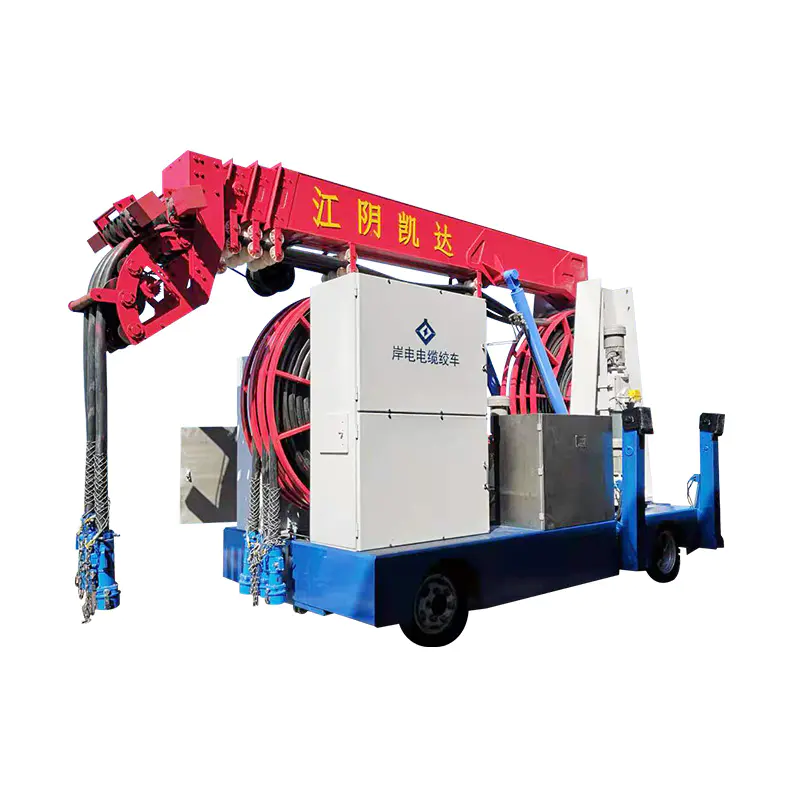
A cable pulling winch is a mechanical or electromechanical device designed to pull, tension, or position heavy loads by winding a steel wire rope or synthetic cable around a drum. Unlike a hoist, which lifts loads vertically, a cable pulling winch is optimized for horizontal or angled pulling operations—drawing cable through conduit, tensioning overhead lines, pulling vehicles out of difficult terrain, or positioning structural components during construction.
The core operating principle is straightforward: a motor or hand crank drives a gear reduction system, which turns the drum at a mechanical advantage sufficient to move loads many times the device's own weight. Gear ratios in industrial cable pulling winches commonly range from 10:1 to over 100:1, allowing a relatively compact unit to generate pulling forces of several tons.
Cable pulling winches are used across a wide range of industries—electrical utility work, telecommunications infrastructure, construction, mining, marine operations, and off-road recovery. Each application places different demands on capacity, power source, cable type, and control system, which is why the market encompasses dozens of distinct configurations.
Types of Cable Pulling Winches
Selecting the right winch starts with understanding the major categories and what distinguishes them technically.
Electric Cable Pulling Winches
Electric winches are the most common type for both industrial and commercial applications. They run on AC or DC power, offer consistent speed control, and can be operated remotely via pendant or wireless controller. AC-powered electric winches are preferred for fixed installations such as factory floors, cable trays, and utility substations, where a stable power supply is available. DC-powered models—typically running on 12V or 24V systems—dominate vehicle-mounted and field recovery applications.
Modern electric winches often incorporate variable frequency drives (VFDs) that allow precise speed control during sensitive cable-laying operations, preventing conductor damage from jerking or sudden load shifts.
Hydraulic Cable Pulling Winches
Hydraulic winches draw power from a hydraulic pump, typically driven by a vehicle's power take-off (PTO) or a dedicated hydraulic power unit. They deliver exceptional pulling force with fine control and are well-suited to environments where electricity presents hazards—underground mining, explosive atmospheres, or waterlogged job sites. Hydraulic winches can sustain continuous operation under full load without overheating, a significant advantage over electric motors in prolonged pulling cycles. Rated capacities for heavy-duty hydraulic models reach 50 tonnes and beyond.
Pneumatic Cable Pulling Winches
Pneumatic winches use compressed air as their power source, making them intrinsically safe for use in flammable or explosive environments where neither electric nor hydraulic power is appropriate. Common in petrochemical plants, refineries, and offshore platforms, pneumatic winches are valued for their simplicity, low maintenance requirements, and ability to operate in wet conditions without electrical risk.
Manual and Hand-Operated Cable Winches
Manual cable pulling winches—sometimes called cable pullers or come-alongs—use a ratcheting lever mechanism to pull cable incrementally. While their capacity is limited (typically under 3 tonnes), they require no power source and are highly portable, making them useful for light tensioning work, wire stringing in remote locations, and emergency recovery situations. They serve as a reliable backup when powered equipment is unavailable.
Pulling and Tensioning Winches for Cable Installation
A specialized subcategory exists specifically for electrical conductor and fiber optic cable installation. These machines—often called cable pullers or stringing equipment—are engineered to pull cable at controlled, consistent tension to prevent conductor elongation, insulation damage, or fiber breakage. They often feature electronic tension monitoring with automatic cutoff when preset limits are exceeded, and are paired with bullwheels or pay-off stands that manage the cable reel.
Key Technical Specifications to Evaluate
When specifying or purchasing a cable pulling winch, several technical parameters determine whether the equipment is safe and effective for a given job.
| Specification | What It Means | Why It Matters |
|---|---|---|
| Rated Line Pull | Maximum pulling force at the first layer of cable on the drum | Force decreases as more cable layers build up; first-layer rating is always highest |
| Cable Capacity | Length and diameter of cable the drum can hold | Must accommodate the full pull distance of the job |
| Line Speed | Metres per minute at rated load | Affects productivity; too fast risks cable or equipment damage |
| Duty Cycle | Percentage of time the winch can run at full load continuously | Critical for long cable pulls; low duty cycle motors overheat under sustained use |
| Brake Type | Mechanical, dynamic, or regenerative braking | Determines load-holding safety when power is interrupted |
| IP Rating | Ingress protection against dust and water | Determines suitability for outdoor, underground, or marine environments |
One commonly overlooked factor is the fleet angle—the angle between the cable leaving the drum and the centerline of the fairlead or guide. Excessive fleet angles cause uneven cable layering on the drum, accelerating wear on both the cable and the drum flanges. Industry practice generally limits fleet angles to a maximum of 1.5° for smooth drums and 2° for grooved drums.
Steel Wire Rope vs. Synthetic Cable: Choosing the Right Line
The cable itself is as important as the winch. The two dominant options—steel wire rope and synthetic fiber rope—each carry meaningful trade-offs.
Steel wire rope has been the standard for industrial cable pulling winches for over a century. It offers excellent abrasion resistance, high breaking strength relative to diameter, and durability in high-temperature environments. A 16mm steel wire rope with a 6×19 construction typically has a minimum breaking force of approximately 140–160 kN, depending on grade. The main drawbacks are weight, the risk of kinking if improperly spooled, and the danger posed by snapped wire rope under tension—broken steel cables release stored energy violently and can cause severe injury.
Synthetic fiber rope—most commonly UHMWPE (ultra-high-molecular-weight polyethylene), sold under trade names like Dyneema and Spectra—has gained significant ground in recovery and off-road winch applications. It is lighter than steel at equivalent strength ratings, floats on water, does not kink, and when it breaks it falls rather than snapping back. For vehicle recovery winches, synthetic rope is now considered the safer choice by most professional recovery operators. Its limitations include lower abrasion resistance than steel, UV degradation over time, and reduced suitability for drum winches in industrial settings where the rope passes over sheaves repeatedly.
Cable Pulling Winch Applications by Industry
Electrical Utility and Power Transmission
Pulling and tensioning winches are central to overhead transmission line stringing and underground cable installation. In overhead line work, conductor tensioning machines maintain precise sag control to meet clearance requirements specified by standards such as IEC 60826 and NESC. Underground cable installation relies on hydraulic or electric cable pulling winches with tension monitoring to prevent insulation damage on medium- and high-voltage cables, where pulling tension limits are specified by the cable manufacturer and typically range from 300 to 1,000 N/cm² on the conductor cross-section.
Telecommunications and Fiber Optic Infrastructure
Fiber optic cables are highly sensitive to tensile stress—exceeding their rated pulling tension, even briefly, can introduce microbends that permanently degrade signal transmission. Cable pulling winches used in telecom installation are specified with electronic load cells and automatic tension cutoff systems. Maximum pulling forces for standard fiber optic cables typically fall between 600 N and 2,700 N depending on cable construction, making precision control far more critical than raw pulling power.
Construction and Civil Engineering
Cable pulling winches are used in construction for positioning precast concrete elements, tensioning post-tension cables in concrete structures, pulling formwork, and moving heavy equipment within confined spaces. In post-tensioned concrete construction, hydraulic stressing jacks—a specialized form of cable pulling device—apply tensile forces to steel tendons that can exceed 200 kN per strand, requiring precisely calibrated equipment and certified operators.
Marine and Offshore
Mooring winches, anchor windlasses, and towing winches on vessels are all forms of cable pulling winches engineered for the marine environment. They must meet classification society requirements (DNV, Lloyd's Register, ABS) for load capacity, material corrosion resistance, and braking performance. Offshore applications additionally require ATEX or IECEx certification if deployed in potentially explosive atmospheres on oil and gas platforms.
Off-Road Vehicle Recovery
Vehicle-mounted recovery winches represent the highest-volume consumer segment of the cable pulling winch market. Rated capacities for this segment typically range from 2,500 lbs (approximately 1,130 kg) for compact SUVs to 20,000 lbs (approximately 9,070 kg) for heavy-duty truck applications. A commonly cited rule of thumb is to select a winch rated at 1.5 times the gross vehicle weight of the vehicle being recovered, accounting for the additional resistance of mud, sand, or steep grades.
Safety Standards and Compliance
Cable pulling winches used in industrial and construction settings are subject to a range of safety standards depending on the region and application. Familiarity with these standards is essential for procurement, inspection, and operation.
- ISO 4308 — Cranes and lifting appliances: selection of wire ropes. Provides guidance on wire rope design factors relevant to winch drum applications.
- EN 14492-1 — European standard for power-driven winches, covering design, safety requirements, and test methods.
- ASME B30.7 — American standard for base-mounted drum hoists applicable to many cable winch configurations in North American markets.
- OSHA 29 CFR 1926.1416 — Equipment inspections applicable to winches used on US construction sites.
- ATEX / IECEx — Required for winches deployed in explosive atmospheres, classifying safe use zones by gas group and temperature class.
Beyond certification, routine operational safety requires that the working load limit (WLL) is never exceeded, that a minimum of three wraps of cable remain on the drum at all times to preserve structural integrity of the drum attachment, and that all personnel stand clear of the cable's potential snap-back zone during operation.
Maintenance and Service Life
A cable pulling winch that is properly maintained will deliver reliable service over many years; one that is neglected can become dangerous well before the end of its mechanical design life. Key maintenance practices include:
- Wire rope inspection: Check for broken wires, kinking, corrosion, and reduction in diameter before each significant use. Replace wire rope when broken wire counts exceed the limits defined in ISO 4309 or the manufacturer's specification—typically 6 broken wires in one rope lay length for a 6-strand rope.
- Drum and gear lubrication: Follow manufacturer-specified intervals for gear oil changes and grease points. Neglected lubrication is the primary cause of premature gear failure in electric winches.
- Brake inspection: Test the brake under load at regular intervals. The brake must hold rated load without creep when power is removed. Brake pad wear is gradual and should be measured, not estimated.
- Electrical connections: Inspect for corrosion, loose terminals, and insulation damage. Corroded connections in DC winch systems cause voltage drops that dramatically reduce pulling performance and accelerate motor wear.
- Load testing: Industrial winches should undergo periodic proof load testing—typically at 110–125% of rated capacity—as required by applicable standards or at intervals specified by the manufacturer or insurance requirements.