

 русский
Content
What Is an Electric Cable Winch Puller?
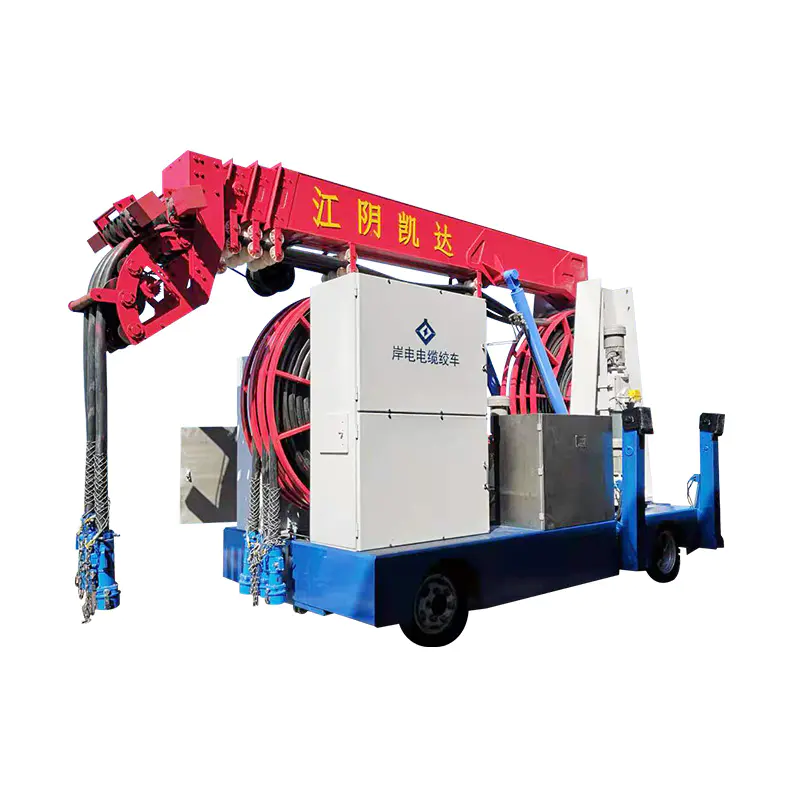
An electric cable winch puller is a motorized pulling device that uses a steel wire rope wound around a drum to generate controlled, sustained tension — typically between 1,000 lbs and 20,000 lbs depending on the model. Unlike manual come-alongs or hydraulic jacks, an electric winch puller delivers consistent line speed and repeatable pull force at the push of a button, making it the preferred choice for wire and cable installation, vehicle recovery, equipment rigging, and utility line work.
The core components are a DC or AC electric motor, a planetary or worm gear reduction system, a spooled steel cable (typically 3/16" to ½" diameter), a braking mechanism, and a control switch or remote. The gear train converts motor speed into pulling torque: a winch rated at 9,500 lbs may use a 6:1 or greater gear reduction ratio to achieve that capacity from a relatively compact motor. This mechanical advantage is what separates a capable winch puller from an underpowered consumer model.
Key Specifications to Evaluate Before Buying
Rated pulling capacity is the most visible spec, but it only tells part of the story. Here is what actually determines performance in the field:
| Specification | What It Means | Typical Range |
|---|---|---|
| Rated Pull Capacity | Maximum line pull at single-line, first layer of drum | 1,000 – 20,000 lbs |
| Motor Power | Sustained HP/kW; determines duty cycle under load | 0.5 – 6 HP |
| Line Speed | Cable retrieval rate at rated load | 4 – 20 ft/min |
| Cable Length & Diameter | Determines reach and safe working load of the wire rope | 50 – 200 ft; 3/16" – ½" |
| Power Supply | 12V/24V DC (vehicle) or 110V/220V AC (shop/site) | 12V DC – 480V 3-phase |
| IP Rating | Ingress protection for dust and moisture | IP44 – IP67 |
One critical detail buyers frequently overlook: rated capacity drops as cable layers build up on the drum. A winch rated at 9,500 lbs on the first layer may deliver only 7,200 lbs on the third layer because the effective drum radius increases, reducing mechanical advantage. For pulls requiring full cable deployment, always factor in this capacity reduction — typically 15–25% per additional layer.
DC vs. AC Electric Winch Pullers: Choosing the Right Power Source
DC winch pullers (12V or 24V) draw power from a vehicle battery or a dedicated power supply and are the standard choice for mobile applications — off-road recovery, towing, agriculture, and marine work. They are self-contained, require no external power outlet, and can be permanently mounted to a vehicle bumper or tow hitch receiver. The trade-off is duty cycle: sustained high-load pulls drain batteries quickly, and most DC motors require cool-down intervals of 5–15 minutes after 60–90 seconds of full-load operation to prevent thermal shutdown.
AC winch pullers (110V, 220V, or 3-phase industrial) are designed for stationary or semi-stationary use: electrical line pulling, underground cable installation, workshop rigging, and construction hoisting. Because they draw from the grid rather than a battery, they support continuous-duty operation without the thermal limitations of DC units. Industrial AC models can maintain rated pull for hours rather than seconds, making them the correct choice for wire and cable pulling tasks where a conduit run may span hundreds of feet.
Hybrid and Generator-Powered Options
For remote sites without grid access but requiring AC-level duty cycles, a generator-powered AC winch puller is a practical middle ground. Ensure the generator's continuous wattage rating exceeds the winch motor's peak draw — typically 1.5–2× the running wattage — to handle startup surge current without voltage drop that triggers motor protection shutoffs.
Common Applications of Electric Cable Winch Pullers
Electric winch pullers are used across a broad range of industries precisely because they deliver repeatable tension without operator fatigue. The most common applications include:
- Electrical cable and wire pulling — drawing conductors through conduit runs in commercial and industrial construction. A dedicated cable-pulling winch with a tension display prevents over-pulling that would damage conductor insulation.
- Vehicle recovery and off-road — self-recovery or assisted extraction of stuck vehicles. Mounting capacity must exceed 1.5× the gross vehicle weight as a minimum safety margin.
- Utility and telecommunications line work — stringing fiber optic, CATV, or power distribution lines between poles, where consistent pull tension is critical to avoid strand elongation.
- Marine and dock use — mooring assistance, trailer loading, and boat retrieval. Marine-rated winches require stainless components and sealed motors with at least an IP56 ingress rating.
- Agriculture and forestry — log skidding, fence tensioning, and equipment extraction in terrain where conventional machinery cannot maneuver.
- Industrial material handling — positioning heavy machinery, pulling equipment skids, and controlled descent/ascent on inclined surfaces inside factories or warehouses.
Safety Practices Every Operator Must Follow
Winch cable failures are among the most dangerous events in rigging work. A snapped wire rope under full tension releases energy comparable to a projectile — steel cables have caused fatal injuries when they recoil after breaking. These practices are non-negotiable:
- Never exceed rated capacity. Use a load cell or in-line dynamometer for critical pulls to confirm actual tension, not estimated load.
- Keep at least 5 wraps of cable on the drum at all times. The innermost layers anchor the cable to the drum; extending beyond this point risks catastrophic unspooling under load.
- Drape a damper (heavy blanket or dedicated cable damper) over the midpoint of the cable during any loaded pull. If the cable parts, the damper absorbs energy and reduces recoil distance dramatically.
- Inspect wire rope before every use. Retire cable that shows kinking, bird-caging, broken strands, or corrosion. A single broken strand reduces safe working load by more than its proportional share because remaining strands bear redistributed stress concentrations.
- Stand clear of the load line during operation. Position all personnel outside the snap-back zone — at minimum, a distance equal to the loaded cable length on both sides of the line.
- Verify anchor point capacity. The anchor — tree, post, vehicle frame — must safely handle the same load the winch is rated for. Anchor failure accounts for a significant share of winch-related incidents.
Maintenance Tips to Extend Service Life
An electric cable winch puller is a precision mechanical device operating under high stress. Neglected maintenance leads to premature cable failure, clutch slippage, motor burnout, and braking system degradation — all of which create safety hazards in addition to repair costs. A straightforward service routine prevents the majority of field failures.
After Every Use
- Spool the cable under light tension so it lies flat and even across the drum. Loose spooling creates cross-wraps that crush lower layers and cause premature strand failure.
- Wipe dirt, mud, and moisture from the cable before it retracts onto the drum. Abrasive contamination acts as grinding compound between cable layers during the next pull.
Periodic Maintenance (Every 25–50 Operating Hours)
- Apply wire rope lubricant to the full cable length. Penetrating lubricants that reach the inner core strands outperform surface greases; look for products specifically rated for wire rope rather than general-purpose grease.
- Inspect the drum, fairlead, and hook for wear, cracks, or deformation. A worn fairlead creates sharp cable bends that fatigue wire strands rapidly.
- Check gear oil level in the gearbox if the model uses a wet-gear design. Low lubricant causes gear wear that manifests as reduced pulling efficiency and audible grinding under load.
- Test the brake function by suspending a known load and confirming the drum does not free-spool when the motor is switched off. A failed brake is a critical safety defect — take the unit out of service immediately.
Synthetic rope is increasingly used as a wire cable replacement in vehicle-recovery applications. It is lighter, does not store snap-back energy the same way steel does, and does not develop the dangerous broken-strand "fishhooks" that cause hand injuries during handling. However, synthetic rope has lower abrasion resistance than steel and should not be used over sharp edges or through metal fairleads without a roller or nylon hawse insert.