

 русский

Cable pulling looks like a simple job from a distance. There is a drum at one end, a duct, tray or trench at the other, and a rope running between them. Anyone who has stood on a site at six in the morning watching a heavy cable take up slack knows it is anything but simple. Pull too hard and the insulation is stressed somewhere you will never be able to inspect. Pull too slowly, or at a bad angle, and the sheath flattens against a roller lip. Feed from the wrong position and the drum starts to run away from the person feeding it.
We have spent more than twenty years building cable winches, cable reels and shore power equipment in Jiangyin, on the Yangtze. What follows is how we explain cable pulling to the people who will actually run the pull.
Content
- 1 What Cable Pulling Really Involves
- 2 The Equipment That Does the Work
- 3 Choosing and Running a Cable Pulling Winch
- 4 Tension, Bend Radius and Damage You Cannot See
- 5 Low, Medium and High Voltage Pulls Are Different Jobs
- 6 Cable Pulling at a Berth: A Different Rhythm
- 7 Recovering the Cable After the Pull
- 8 A Pre-Pull Checklist Worth Printing
- 9 Mistakes We See Again and Again
- 10 Wrapping Up
What Cable Pulling Really Involves
In plain terms, cable pulling is the controlled application of force to move a cable from the drum it was delivered on into its final route: through a duct, along a tray, into a trench, or up into a cabinet. On a construction site the cable usually goes in once and stays for decades. In a port it is different, because a shore power cable is pulled, connected, disconnected and recovered every time a vessel berths, sometimes several times in a single day.
That difference shapes everything else. A one-off installation pull is planned around a single safe pass and a generous margin. A repeat pull is planned around a machine, a routine and a crew that has to do the same thing hundreds of times without a near miss. The second case punishes laziness far more quickly than the first.
The Equipment That Does the Work
Most pulls rely on the same handful of components. This is the set we would want on any job where the cable is too heavy or too stiff to handle by hand.
| Equipment | What it does | Where it matters most |
|---|---|---|
| Pulling winch | Applies steady, measurable line pull | Heavy cable, long runs, repeat pulls |
| Rollers and sheaves | Carry the cable and control bend radius | Duct entries, corners, trench walls |
| Pulling grip or sock | Transfers force to the cable without crushing it | Every pull, especially on large conductors |
| Swivel | Stops the rope torque from twisting the cable | Long pulls with stranded rope |
| Lubricant | Reduces friction and pulling tension | Duct and conduit routes |
| Tension monitoring | Shows the real force before damage happens | Medium and high voltage work |
Two things are easy to forget. First, the winch is only one part of the system: rollers, entry guides and a proper grip decide whether the force goes into the conductor or into the sheath. Second, communication between the pulling end and the feeding end is equipment in its own right. Radios, agreed signals and one clearly responsible person are not optional extras.
Choosing and Running a Cable Pulling Winch
A cable pulling winch is judged on two numbers first: the line pull it can hold and the drum capacity the job needs. Everything after that is what decides whether a pull feels calm or frightening. Smooth acceleration, a brake that holds without creeping, a drum that spools evenly, and a fleet angle small enough that the rope never rubs the flange all matter more than a headline rating.
Electric drives have largely taken over from hydraulic units on fixed installations because they are cleaner, quieter and easier to tie into a control system. Hydraulics still earn their place where the unit must be very compact or work in a hazardous area. Our own view, after two decades of building both, is that the drive matters less than the control philosophy: soft start, adjustable speed, a load limit that an impatient operator cannot override, and a stop that is genuinely a stop.
For marine and dockside work the extra questions are corrosion, ingress protection, and how the machine behaves when it is left in salt air for a season. A correctly rated winch in a poor enclosure will fail long before a modestly rated one that has been treated properly.
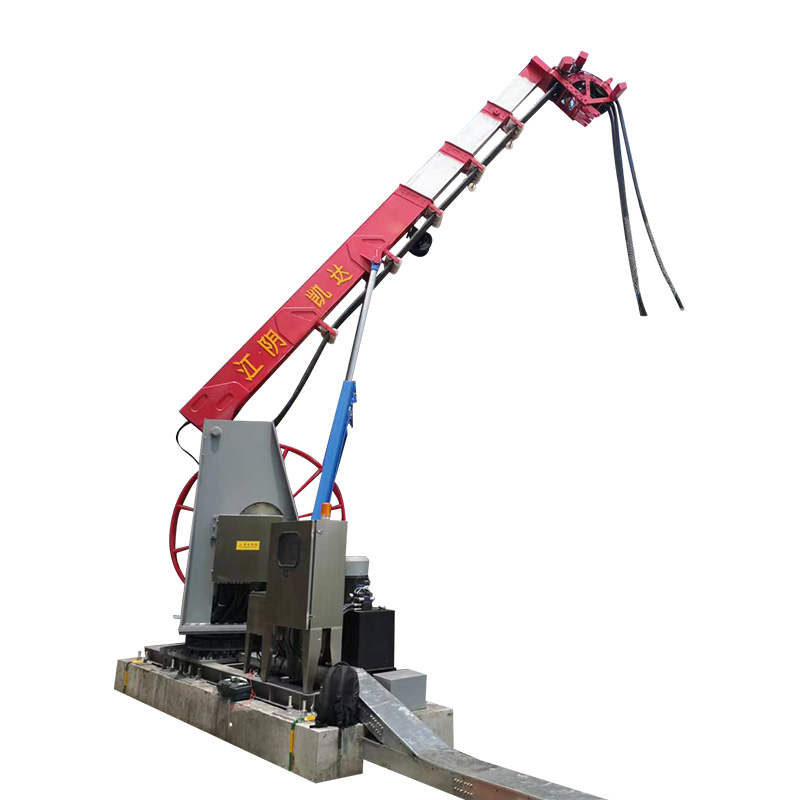
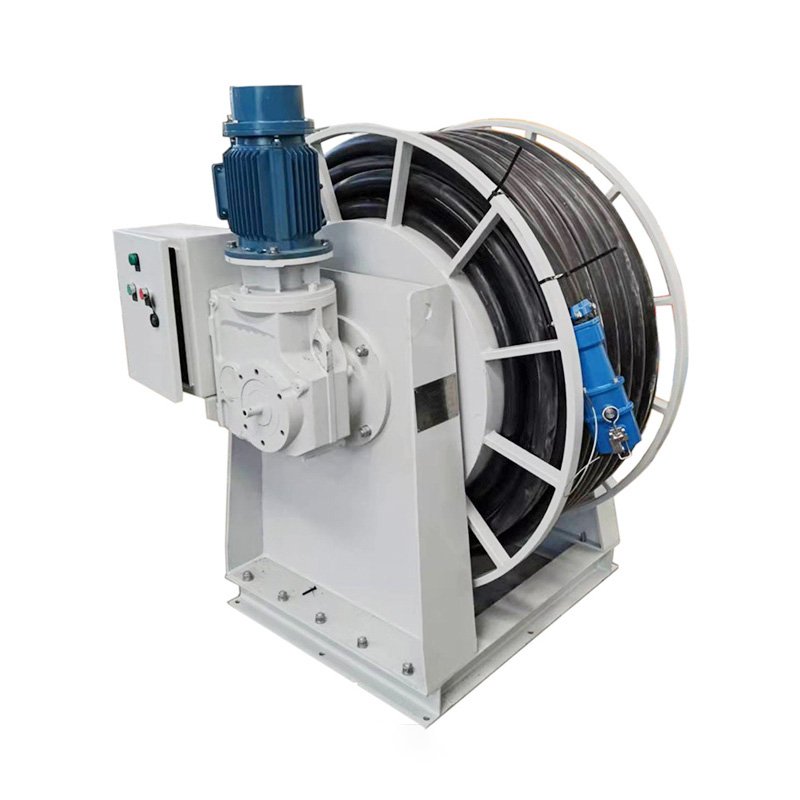 Marine Cable Pulling Winch for Shore PowerShipboard winch for storing and releasing shore-power cable; its marine-focused construction suits dockside use where corrosion and ingress protection matter.View Product →
Tension, Bend Radius and Damage You Cannot See
Cable damage rarely announces itself. A conductor is stretched, strands break inside a core, or a sheath is scuffed against a duct mouth, and the cable still tests fine on the day. The fault surfaces months later as a hot joint or a failed insulation resistance reading, and by then the pull is a distant memory.
Three numbers keep you honest. The first is the cable manufacturer's maximum pulling tension, which should be calculated for the conductor and never estimated from the winch rating. The second is the minimum bend radius, which has to be respected at every roller, every duct entry and every cabinet gland, not just on the straight runs. The third is sidewall pressure on bends, which is where many heavy pulls quietly go wrong even when the tension reading looks acceptable.
Instrument the pull. A tension meter with a recorder, or at minimum a calibrated relief setting on the winch, turns a subjective judgement into a number the whole crew can see. If the pull approaches the limit, stop and lubricate or re-route rather than pushing through. We have never once regretted stopping a pull early.
Low, Medium and High Voltage Pulls Are Different Jobs
The mechanics are the same, but the tolerances are not. The higher the voltage, the less willing you should be to accept sheath damage, moisture ingress or an extra joint created because a pull had to be abandoned halfway.
| Class | Typical character | Priority on site |
|---|---|---|
| Low voltage | Shorter runs, more bends, tighter spaces | Bend radius and sheath abrasion |
| Medium voltage | Longer ducts, heavier cable, jointing cost | Tension control and clean duct entry |
| High voltage | Very heavy cable, strict handling rules | Documented tension, trained crew, no shortcuts |
On medium and high voltage work, plan the pull in the same meeting as the jointing. Where the cable stops determines where the joint goes, and a joint placed badly costs far more than an extra hour of preparation.
Cable Pulling at a Berth: A Different Rhythm
Shore power changes the nature of the task. The cable is not being installed once; it is being handled by a crew on a schedule, often at night, often in wind and rain, with a ship waiting. A cruise terminal might run several connections a day during turnaround season, and every one of them is a pull.
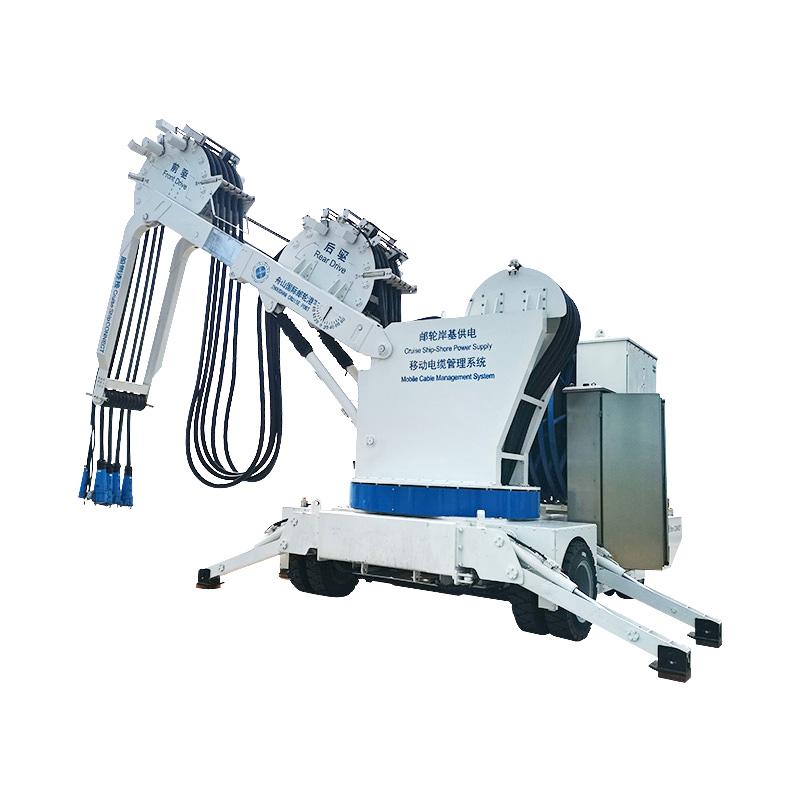
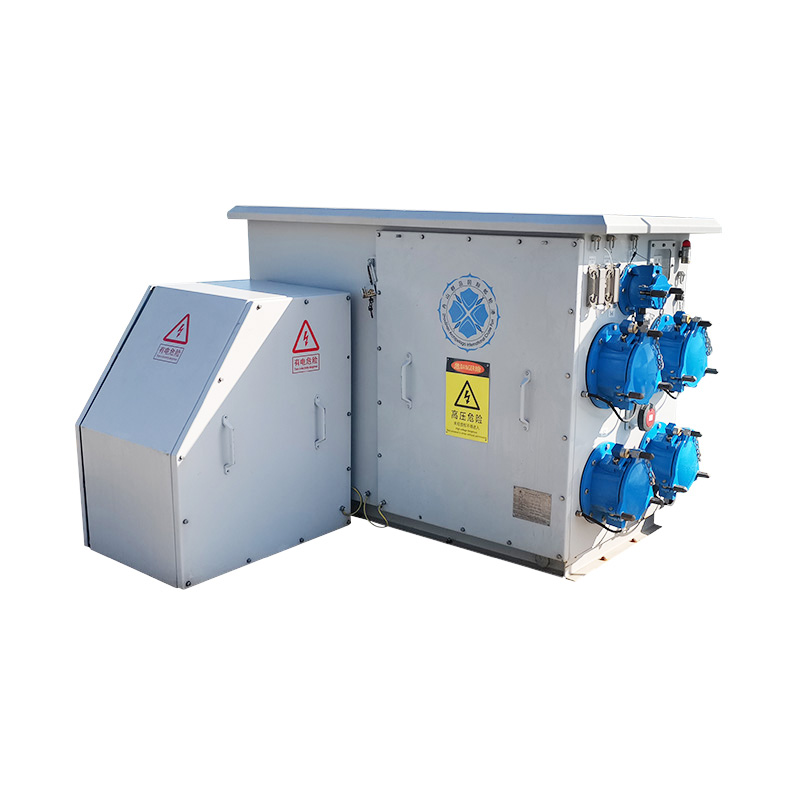
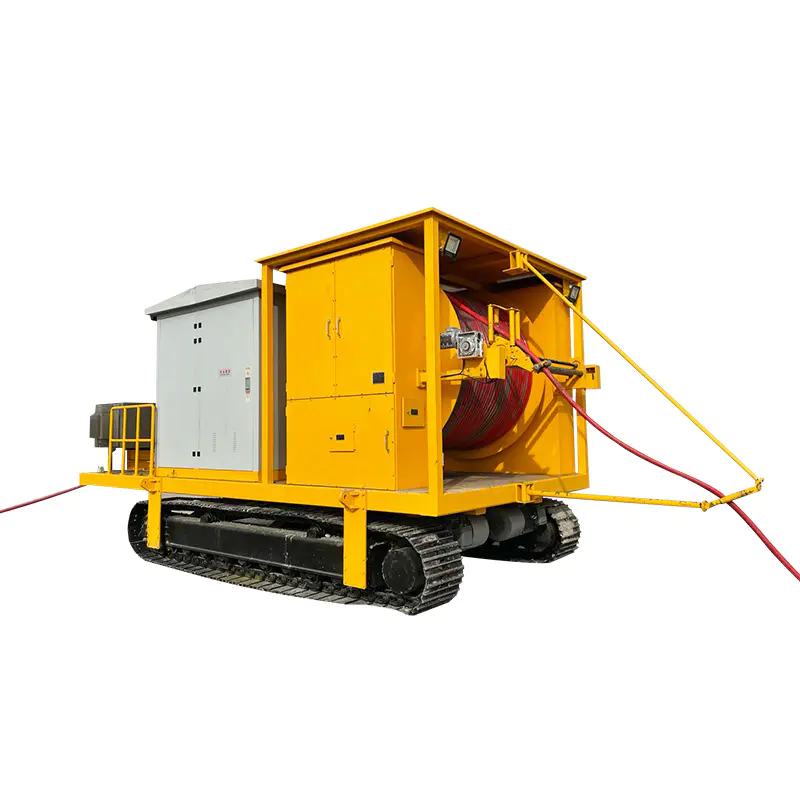
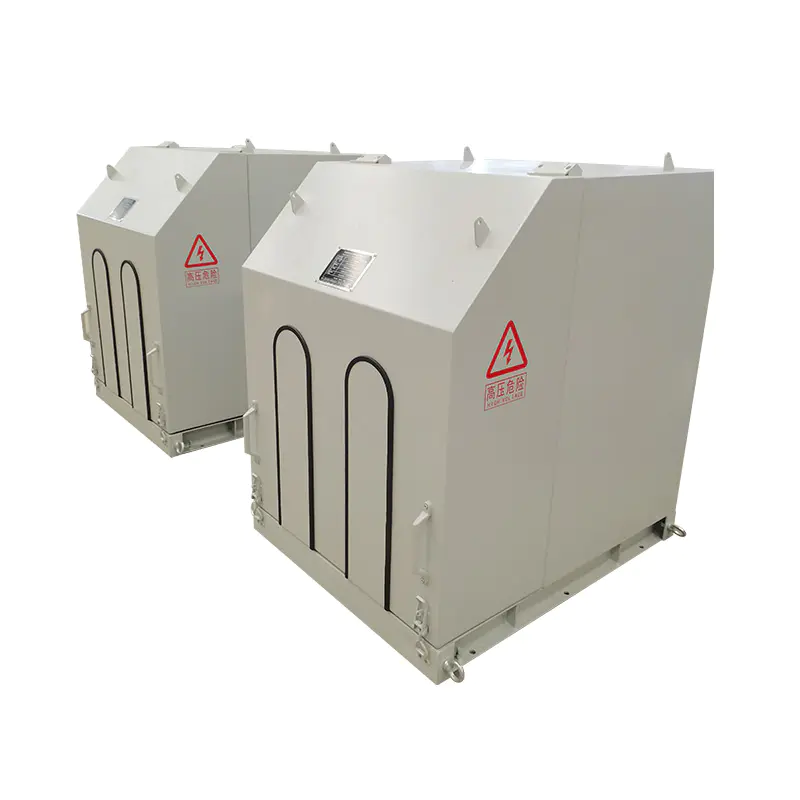
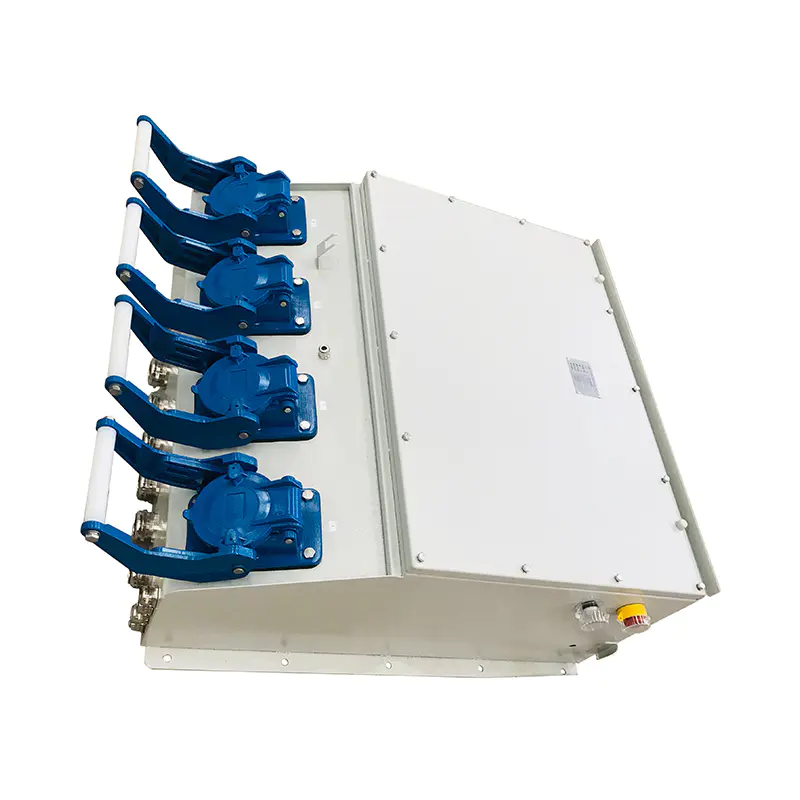
This is where a self-propelled or rail-mounted unit earns its cost. The machine travels to the cable rather than the crew dragging the cable to a fixed point, the route stays consistent, and the operator works from a known position with a predictable field of view. Add a high voltage socket box at the vessel end and the whole connection becomes a repeatable procedure instead of a daily improvisation.
Our advice to terminal engineers is always the same: design the cable route before specifying the winch. Where the cable is stored, how it is guided over the quay edge, and how it is protected at the ship's connection point will shape the machine you need far more than the tonnage of the vessel.
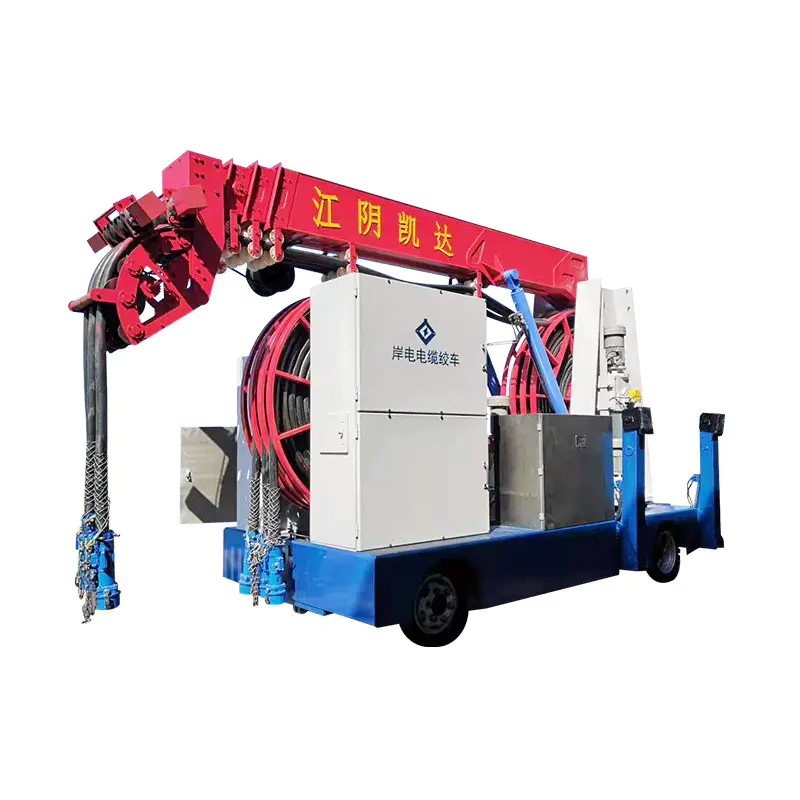
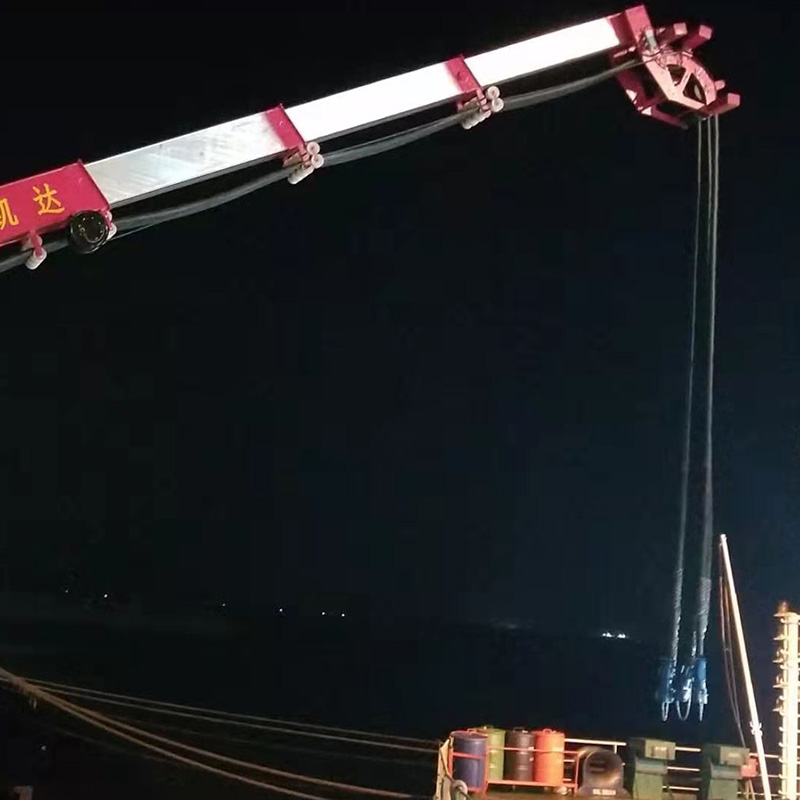 Self-Propelled Shore Power Cable Pulling WinchSelf-driving winch for pulling, laying, and reclaiming shore-power cables with controlled traction and speed, suited to precise port and dock operations.View Product →
Recovering the Cable After the Pull
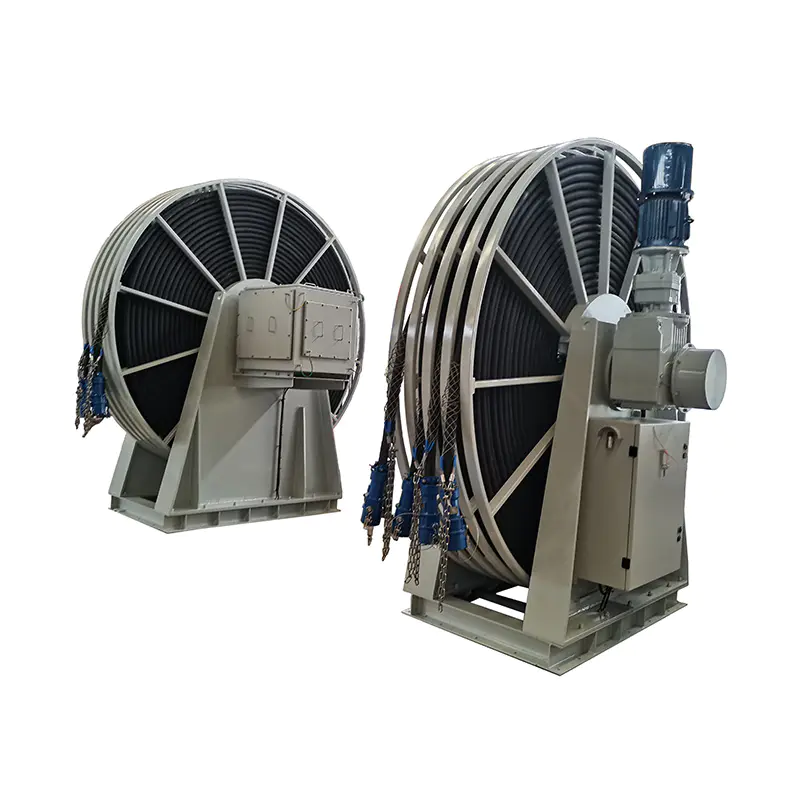
The pull gets the attention, but the recovery is where repeat operations are won or lost. A cable wound back onto a drum under uneven tension, with dirt trapped between layers, will develop kinks and flat spots that show up as handling problems for months. Motor-driven reels solve this by controlling spooling speed and keeping a consistent wrap, and by removing the manual labour that causes most back injuries in cable work.
Whatever the arrangement, the drum should be inspected before the cable goes back on: no rust, no burrs, no crushed flanges. The cable should be cleaned if the route is dirty, and the pulling grip should come off before recovery, not after.
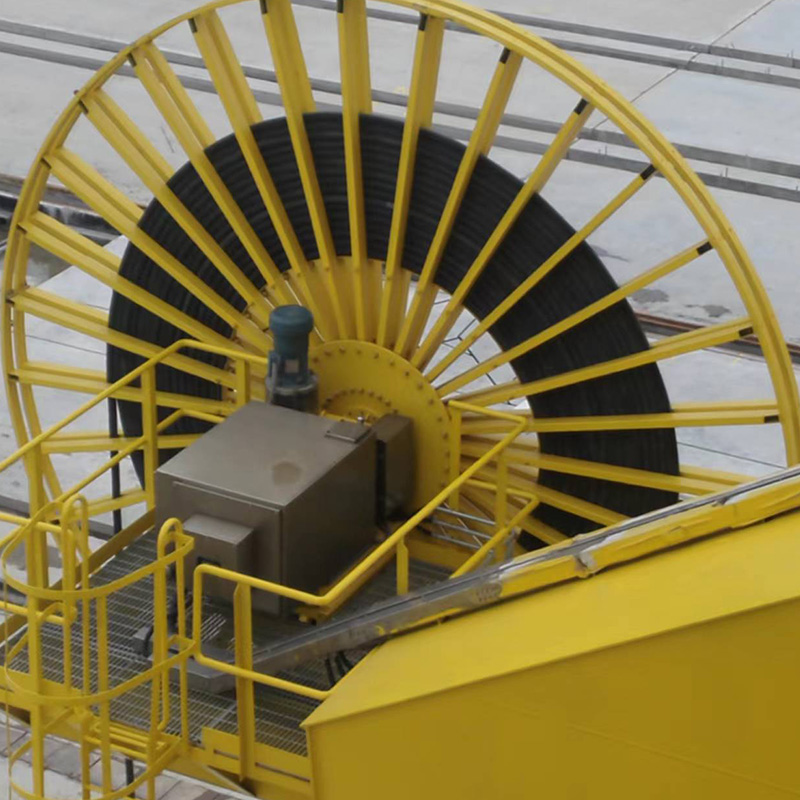 Motor-Driven Cable Reel with Tension ControlMotor-driven reel that winds and releases cable under adjustable speed; advanced versions offer tension control for more consistent spooling during recovery.View Product →
A Pre-Pull Checklist Worth Printing
- Confirm the route, the duct condition and the actual cable length against the drawing.
- Calculate maximum pulling tension and minimum bend radius from the cable data sheet.
- Inspect the winch, rope, grips, rollers and sheaves before anything is rigged.
- Agree the communication method and appoint one person in charge of the pull.
- Clear the route of people who do not need to be there, and barricade the pulling end.
- Lubricate as specified, and record tension at intervals during the pull.
- Leave enough cable for the termination, then secure it before releasing tension.
If your team works with powered winches regularly, it is worth pairing this list with a short review of cable winch safety tips at the start of each project.
Mistakes We See Again and Again
- Choosing a winch on line pull alone and ignoring drum capacity and spooling.
- Pulling through a corner without a sheave, so the duct mouth does the guiding instead.
- Trusting the winch gauge rather than a tension measurement at the cable.
- Starting a pull without a clear stop signal agreed in advance.
- Recovering a cable wet and dirty, then storing it that way.
- Treating a shore power pull as routine simply because it happens often.
Wrapping Up
Good cable pulling is unspectacular. The winch starts softly, the tension stays inside the limit, the cable arrives at the far end with its sheath intact and nobody has to improvise. That result comes from a small number of decisions made before the first rope is rigged: the right machine, the right route and a crew that has agreed on what "stop" means.
If you are specifying equipment for a one-off installation or for a berth that will see thousands of connections, we are always glad to talk through the route with you. Twenty years of building these machines has taught us that the best answers usually come from the people who will stand next to them.